
On one of my early construction audits at a multi-storey commercial project, everything looked “fine” on paper—permits approved, safety file updated, toolbox talks recorded. But during a routine walkdown, I noticed something critical: blocked fire exits behind stacked drywall sheets and an overloaded temporary electrical panel running without proper insulation checks.
The site manager was surprised when I raised it. “We’ve never had an issue before,” he said.
That’s exactly how most incidents begin.
In industrial environments, fire risks rarely announce themselves. They accumulate silently—poor housekeeping, neglected inspections, untested alarms, expired extinguishers. This is where fire safety inspection companies play a critical role. They don’t just check boxes; they identify failures before they become emergencies.
Understanding the Role of Fire Safety Inspection Companies
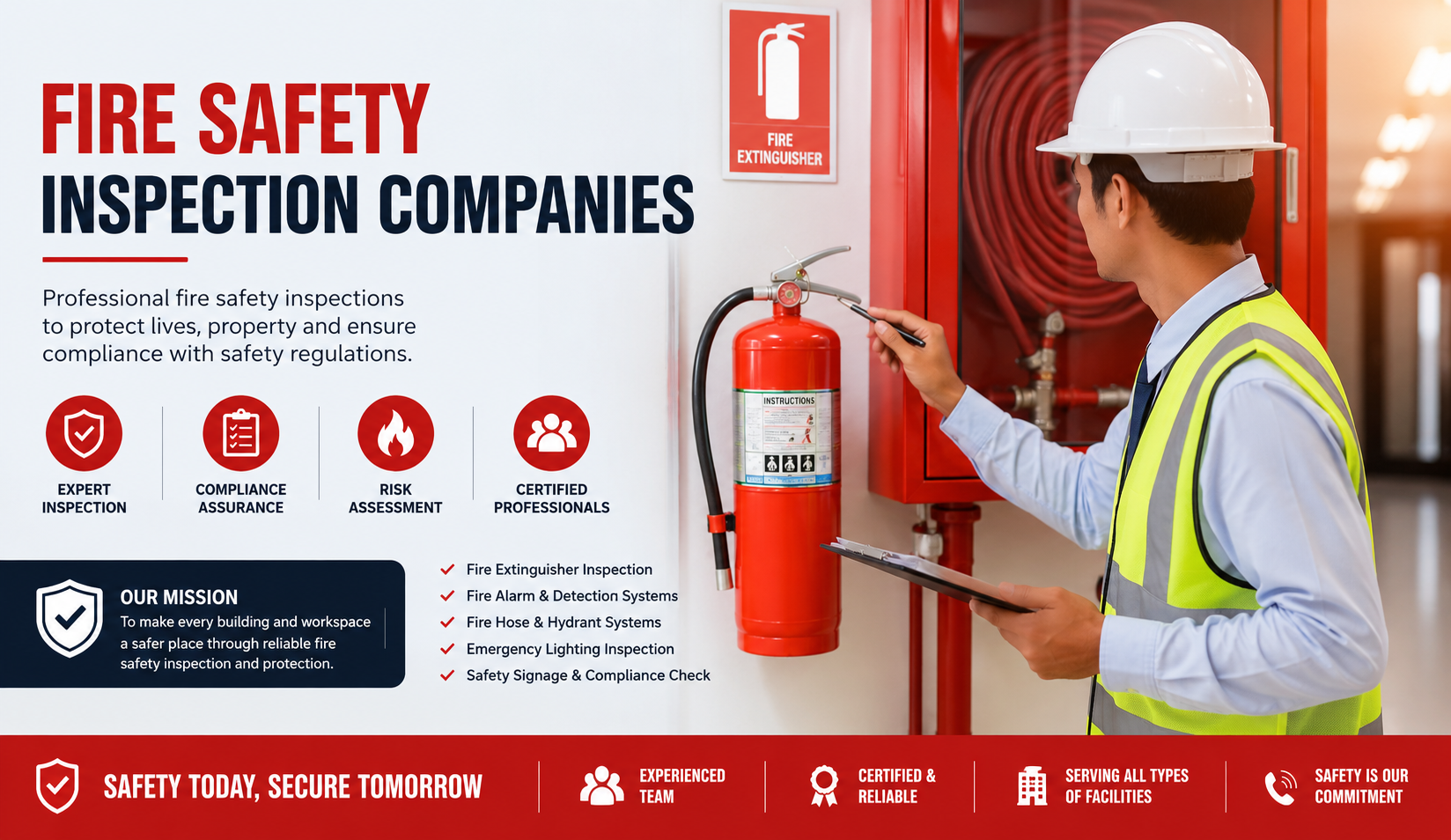
Fire safety inspection companies specialize in assessing workplace environments for fire hazards, compliance gaps, and emergency preparedness. Their role is deeply rooted in HSE (Health, Safety & Environment) principles and regulatory compliance frameworks.
In real-world operations—construction, oil & gas, manufacturing, warehouses—these companies evaluate:
- Fire detection systems (alarms, smoke detectors)
- Emergency evacuation routes
- Electrical safety and load risks
- Storage of flammable materials
- Fire extinguisher placement and validity
- Hot work compliance procedures
- Site-specific fire risk assessments
A proper inspection is not a surface-level walkthrough. It is a structured risk assessment process aligned with occupational safety standards and site-specific hazards.
From my experience in industrial audits, the difference between a compliant site and a non-compliant one is often not equipment—it’s discipline.
Why Fire Safety Inspections Matter in High-Risk Industries
In sectors like oil refineries, construction zones, and chemical plants, fire hazards are not theoretical—they are operational realities.
Key reasons inspections are critical:
- Prevent ignition sources from escalating into major incidents
- Ensure compliance with safety regulations and audit readiness
- Reduce downtime caused by accidents or investigations
- Protect workforce lives and company assets
- Maintain insurance validity and legal protection
A single missed hazard—like faulty wiring near fuel storage—can escalate into a full-scale emergency within minutes.
This is why experienced fire safety inspection companies are often brought in before project commissioning or during major operational changes.
Step-by-Step Fire Safety Inspection Process (On-Site Perspective)
Based on field-level HSE inspection practice, a standard process typically includes:
1. Pre-Inspection Documentation Review
Inspectors begin by reviewing:
- Fire risk assessments
- Emergency response plans
- Equipment maintenance logs
- Previous audit findings
This helps identify historical weak points before stepping on site.
2. Physical Site Walkthrough
This is the most critical phase.
Inspectors assess:
- Exit accessibility and signage visibility
- Storage of flammable or hazardous materials
- Electrical panel safety and overload risks
- Housekeeping conditions (waste accumulation, obstruction zones)
In many audits I’ve conducted, poor housekeeping is the first visible indicator of deeper safety management failure.
3. Fire Protection System Testing
This includes:
- Fire alarms and sirens
- Sprinkler systems
- Fire extinguishers (pressure, expiry, placement)
- Emergency lighting systems
Even a fully installed system is useless if not tested regularly.
4. Hot Work and Operational Risk Review
Construction and industrial sites often involve welding, cutting, and grinding activities.
Inspectors verify:
- Hot work permits
- Fire watch procedures
- Spark containment measures
- Isolation of combustible materials
5. Reporting and Risk Classification
Findings are categorized as:
- Critical (immediate action required)
- Major non-compliance
- Minor observations
A professional report from fire safety inspection companies is not just documentation—it is a corrective roadmap for management.
Also read: How do you perform fire safety risk assessment in workplaces
Common Risks and Mistakes Found During Fire Inspections
Across industries, the same failures repeatedly appear during audits:
1. Blocked Emergency Exits
Materials stored in evacuation paths are one of the most common violations.
2. Poor Electrical Maintenance
Overloaded sockets and temporary wiring without protection are major ignition sources.
3. Expired Fire Extinguishers
Often ignored until inspection day exposes them.
4. Lack of Training
Workers are unaware of evacuation procedures or extinguisher use.
5. Weak Housekeeping Standards
Waste buildup, oil spills, and unmanaged storage areas.
These issues may look minor, but in real incidents, they become the trigger points.
Industry Best Practices Used by Fire Safety Inspection Companies
Experienced inspectors follow structured HSE methodologies rather than guesswork.
Key best practices include:
- Routine scheduled inspections instead of reactive checks
- Integration of fire safety into daily toolbox talks
- Use of digital inspection checklists for traceability
- Continuous hazard identification programs
- Alignment with international safety frameworks such as ISO-based management systems
A strong safety culture ensures fire prevention is not an inspection event—it is a daily habit.
Compliance and Legal Impact of Fire Safety Inspections
Non-compliance in fire safety is not just an operational issue—it is a legal risk.
Regulatory bodies can impose:
- Heavy financial penalties
- Work stoppages or shutdown orders
- Legal liability in case of incidents
- Insurance claim rejections
From a management perspective, hiring professional fire safety inspection companies ensures audit readiness and reduces exposure to regulatory action.
In high-risk industries, compliance is not optional—it is survival.
Real-World Insight: What Most Companies Miss
In many site audits, I’ve seen companies invest heavily in equipment but neglect behavioral safety.
Fire systems may be installed correctly, but:
- Workers bypass procedures under time pressure
- Supervisors ignore minor hazards
- Reporting systems are not followed
This gap between system and behavior is where most failures occur.
A good inspection company doesn’t just check systems—they assess human behavior patterns too.
FAQS: fire safety inspection companies
They evaluate workplaces for fire hazards, check compliance systems, and ensure emergency readiness through structured inspections and reporting.
Frequency depends on risk level, but high-risk sites often require monthly or quarterly inspections along with daily safety checks.
Yes, most industries are legally required to maintain fire safety compliance under occupational safety laws and local regulations.
Construction, oil & gas, manufacturing, chemical plants, warehouses, and large commercial facilities have the highest fire risk exposure.
The site may be required to correct violations immediately, and in severe cases, operations can be suspended until compliance is restored.
Conclusion
Fire safety is not a paperwork exercise—it is a frontline responsibility in every industrial operation. Fire safety inspection companies bring structure, discipline, and technical expertise into environments where risks evolve daily.
From construction sites to heavy industry, their role is to identify what is often overlooked and ensure that safety systems are not only installed but also effective in real conditions.
At the end of the day, fire prevention is not about reacting to incidents—it is about ensuring they never happen in the first place.