
During a routine HSE inspection at a construction site, a safety officer notices something alarming—temporary electrical cables running across wet flooring near a paint storage area. No proper segregation, no fire extinguishers nearby, and workers unaware of emergency evacuation routes.
Within minutes, a minor electrical spark occurs due to cable damage. Fortunately, it is contained quickly. But in a different situation, this could have escalated into a full-scale industrial fire, causing injuries, asset loss, and regulatory shutdown.
This is exactly where a fire safety risk assessment becomes not just a compliance document—but a life-saving operational control. A proper fire safety risk assessment helps identify these hidden hazards before they turn into serious incidents.
In my two decades of field experience across construction, oil & gas, and manufacturing sites, I have seen one consistent truth:
👉 Fires rarely happen due to one mistake—they happen due to ignored risks stacking up over time.
Understanding Fire Safety Risk Assessment in the HSE Context
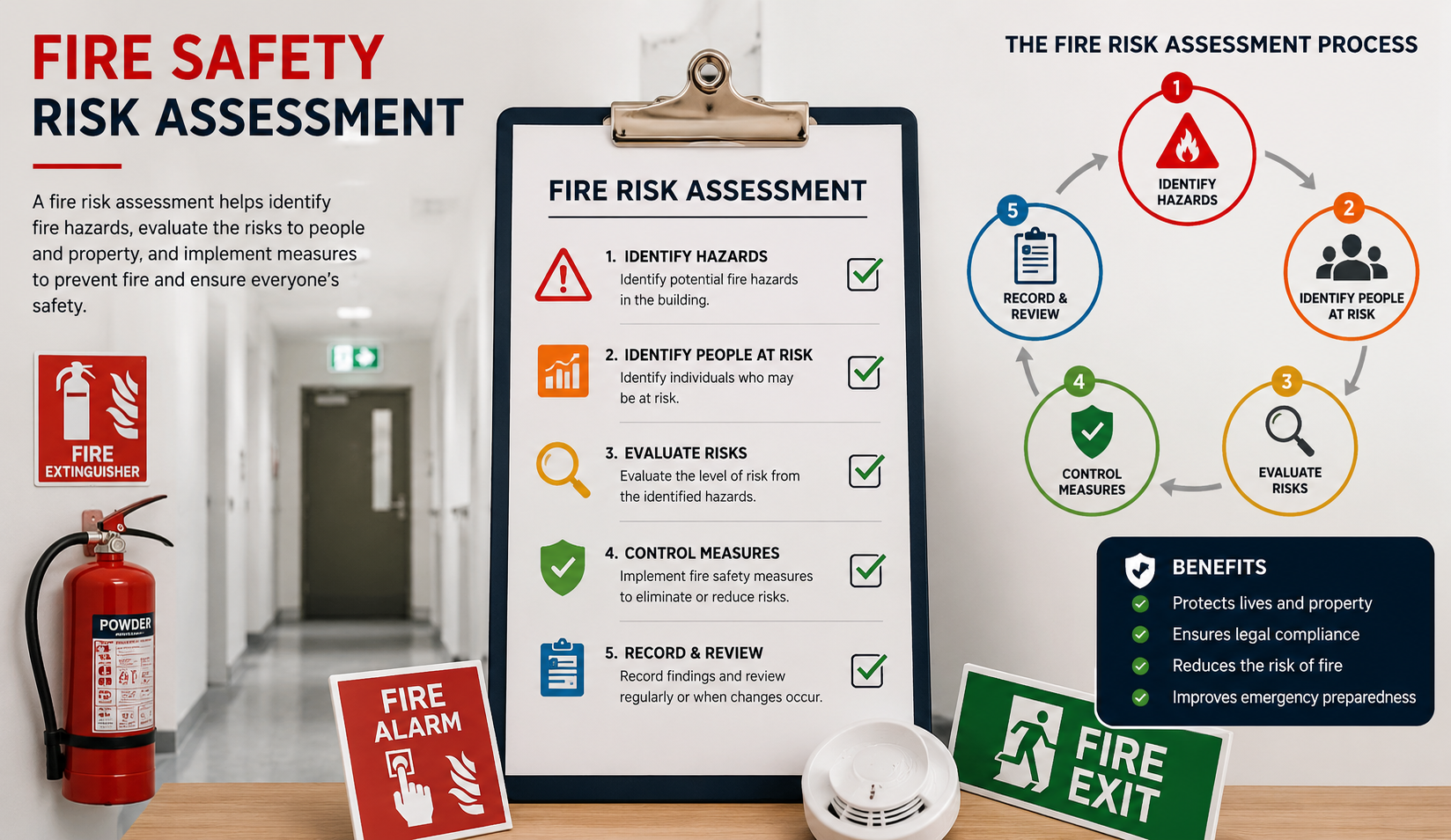
A fire safety risk assessment is a structured process used to identify fire hazards, evaluate risk levels, and implement control measures to prevent fire incidents in workplaces.
In HSE practice, it focuses on four key questions:
- What can cause a fire?
- Who can be harmed?
- How likely is it to happen?
- What controls are in place or missing?
From an operational safety perspective, this assessment is a core requirement in workplace safety management systems, especially in high-risk industries like:
- Oil & gas refineries
- Construction sites
- Chemical plants
- Warehousing and logistics
- Manufacturing units
A proper fire safety risk assessment is not paperwork—it is a living safety system that must be updated as site conditions change.
Key Components of Fire Safety Risk Assessment
1. Hazard Identification
This is the foundation of any fire safety risk assessment process.
Common fire hazards include:
- Electrical faults and overloaded circuits
- Flammable liquids and gases
- Hot work activities (welding, cutting, grinding)
- Poor housekeeping and waste accumulation
- Improper storage of combustible materials
In real HSE audits, poor housekeeping alone is responsible for a large percentage of fire risk escalations.
2. People at Risk
Identifying who may be affected includes:
- On-site workers
- Contractors and subcontractors
- Maintenance teams
- Visitors and inspectors
Special attention must be given to high-risk groups such as night shift workers or personnel in confined industrial zones.
3. Evaluation of Existing Controls
This step reviews whether current safety procedures are effective:
- Are fire extinguishers accessible and inspected?
- Are emergency exits clearly marked and unobstructed?
- Are electrical systems maintained and certified?
- Are workers trained in fire response procedures?
A gap in any of these areas increases overall fire risk exposure.
4. Risk Level Determination
Risk is typically categorized as:
- Low Risk: Well-controlled environment
- Medium Risk: Some gaps in controls
- High Risk: Immediate corrective action required
In industrial settings, even a “medium risk” fire hazard can escalate quickly if ignored.
5. Control Measures and Action Plan
Controls may include:
- Installation of fire detection systems
- Segregation of flammable materials
- Hot work permit systems
- PPE enforcement (fire-resistant clothing, gloves)
- Regular safety audits and inspections
A strong fire safety risk assessment always ends with a documented corrective action plan.
Also read: Fire Safety In The Workplace How Can You Stay Safe At Work?
Step-by-Step Fire Safety Risk Assessment Process (On-Site Approach)
From an HSE operational standpoint, here is how professionals conduct assessments in the field:
Step 1: Site Walkthrough Inspection
- Identify ignition sources
- Check storage conditions
- Observe worker behavior
Step 2: Documentation Review
- Safety data sheets (SDS)
- Equipment maintenance logs
- Hot work permits
Step 3: Risk Mapping
- Mark high-risk zones on layout plans
- Identify fire load areas
Step 4: Control Verification
- Test alarms and extinguishers
- Inspect emergency lighting systems
Step 5: Reporting and Recommendations
- Document findings
- Assign corrective actions
- Set deadlines and responsible persons
This structured workflow ensures the fire safety risk assessment is practical, not theoretical.
Common Risks and Mistakes in Fire Safety Management
In real-world HSE investigations, these mistakes are repeatedly observed:
Poor Housekeeping Practices
Accumulated waste, oily rags, and scrap materials act as fuel for fire spread.
Ignoring Electrical Safety Standards
Overloaded sockets and temporary wiring are among the top fire triggers.
Inadequate Training
Workers unaware of evacuation procedures often panic during emergencies.
Missing Hot Work Controls
Welding without permits is a major violation in industrial safety audits.
Blocked Emergency Exits
A critical compliance failure that can lead to fatalities during fire incidents.
Each of these issues significantly weakens the effectiveness of any fire safety risk assessment system.
Industry Best Practices for Fire Risk Control
Based on international HSE principles and field implementation experience, these practices are essential:
- Conduct periodic fire safety risk assessment reviews (monthly or quarterly)
- Implement strict hot work permit systems
- Maintain fire zoning in high-risk areas
- Ensure regular fire drills and emergency simulations
- Use calibrated and certified fire detection systems
- Enforce PPE compliance for all high-risk operations
The most effective safety systems are proactive, not reactive.
Compliance and Regulatory Impact
A weak or missing fire safety risk assessment can result in:
- Legal penalties and fines
- Project shutdowns during inspections
- Insurance claim rejections
- Loss of certification or client approval
- Severe workplace incidents leading to investigations
From an HSE compliance perspective, regulatory bodies expect documented evidence of:
- Risk identification
- Control implementation
- Regular monitoring
- Continuous improvement
Auditors do not only check paperwork—they verify real-site conditions.
FAQs: Fire Safety Risk Assessment
It identifies fire hazards, evaluates risk levels, and ensures proper control measures are in place to prevent workplace fires.
It should be reviewed regularly, especially when workplace conditions, processes, or materials change.
Typically, trained HSE officers, safety engineers, or competent persons appointed by management.
All industries require it, but it is critical in construction, oil & gas, manufacturing, and chemical processing.
It can lead to serious accidents, legal penalties, operational shutdowns, and loss of life or assets.
Conclusion
A fire safety risk assessment is not just an HSE requirement—it is a frontline defense against one of the most destructive workplace hazards.
From electrical systems to housekeeping practices, every detail matters. In high-risk industries, fire incidents rarely give second chances.
Professionals who treat fire risk assessments as an ongoing safety process—not a one-time document—are the ones who maintain safer, more compliant, and more resilient workplaces.
In the end, effective fire safety is not about reacting to incidents—it is about preventing them before they ever begin.