
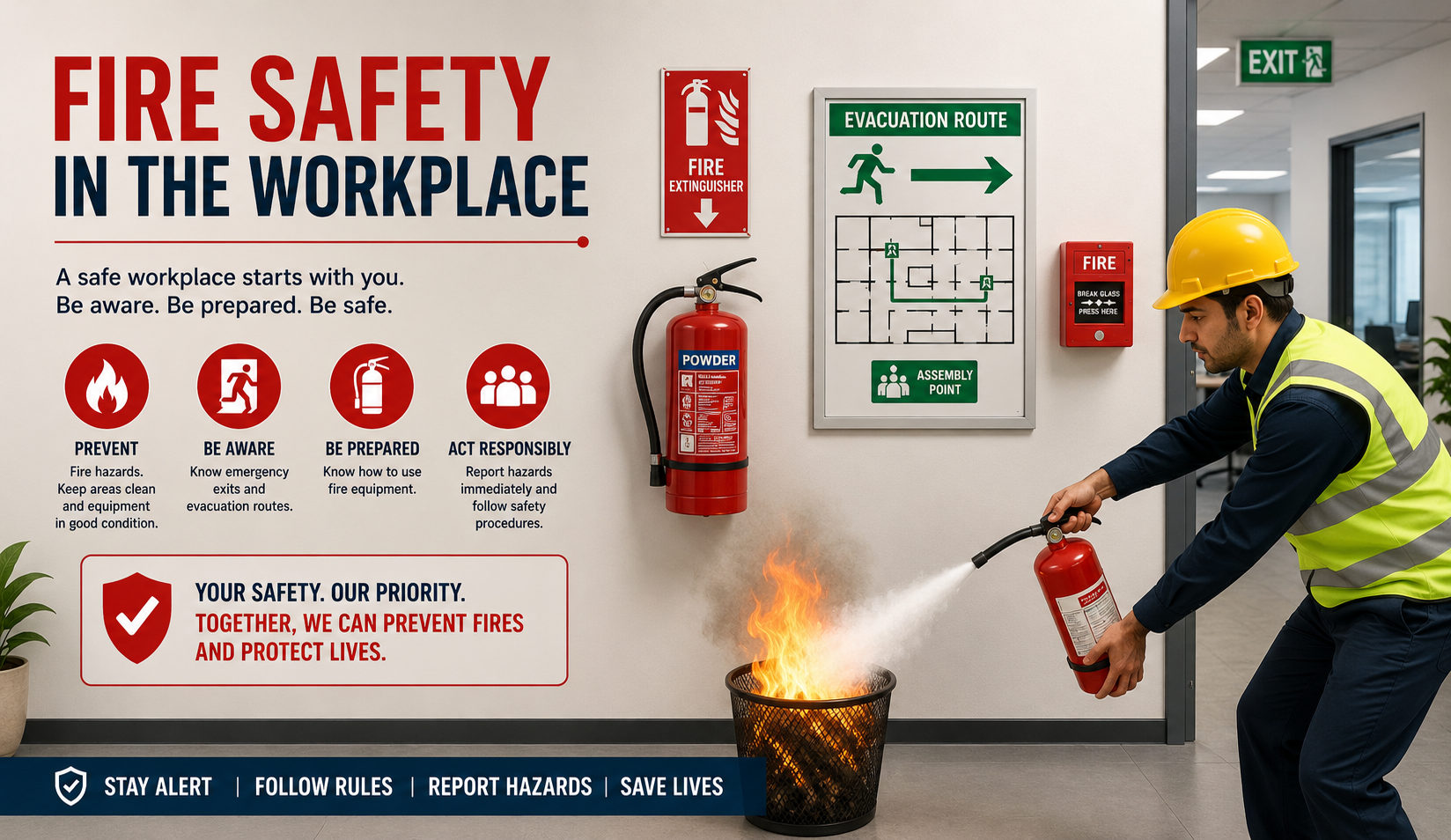
During an HSE inspection at a mid-sized fabrication yard, a small electrical spark inside a poorly maintained distribution panel escalated into a fast-spreading fire within minutes. The root cause was not “bad luck” — it was a combination of poor housekeeping, missing preventive maintenance records, and lack of basic fire risk awareness among site supervisors.
As someone who has conducted dozens of site audits across construction and industrial facilities, I can say with confidence: fire safety in the workplace is rarely about the fire itself—it is about the failure of controls long before ignition occurs.
Most workplace fires are preventable. Yet they continue to happen due to weak hazard identification, ignored safety procedures, and lack of compliance discipline.
This article breaks down fire safety from a real HSE practitioner’s perspective—focused on prevention, compliance, and field implementation.
Understanding Fire Safety in the Workplace from an HSE Perspective
Fire safety in the workplace is not just the installation of extinguishers or alarms. In HSE practice, it is a structured system that includes:
- Hazard identification and fire load assessment
- Risk assessment and control measures
- Emergency preparedness and evacuation planning
- Routine inspections and maintenance
- Worker training and behavioral safety controls
In high-risk industries like construction, oil & gas, and manufacturing, fire hazards are often linked to:
- Hot work activities (welding, cutting, grinding)
- Electrical faults and overloaded circuits
- Flammable chemical storage
- Poor housekeeping and waste accumulation
- Improper permit-to-work systems
Without a structured safety management system, even minor oversights can escalate into catastrophic losses.
Key Fire Hazards in Industrial and Construction Environments
From field experience, fire risks typically fall into predictable categories:
1. Electrical System Failures
Overloaded panels, temporary wiring, and damaged insulation are leading ignition sources. These issues are often found during safety audits in construction sites.
2. Hot Work Activities
Welding and cutting without proper fire watch or permits remain one of the most common causes of workplace fires.
3. Flammable Materials
Improper storage of solvents, fuels, paints, and gas cylinders significantly increases fire load.
4. Poor Housekeeping
Accumulated waste, oily rags, and blocked exits increase both fire probability and severity.
5. Human Error
Lack of training, bypassing procedures, and unsafe behaviors remain consistent root causes in incident investigations.
Step-by-Step Fire Safety Implementation in the Workplace
Effective fire safety in the workplace requires structured execution, not theory. Below is a practical HSE-based implementation approach used in real site environments.
Step 1: Fire Risk Assessment
Conduct a detailed fire risk assessment covering:
- Ignition sources
- Fuel sources
- Oxygen availability
- Existing control measures
Document all findings in a risk register and assign corrective actions.
Step 2: Hazard Identification and Site Inspection
Regular HSE inspections should focus on:
- Electrical panels and temporary wiring
- Storage areas for chemicals and fuels
- Emergency exits and signage visibility
- Fire extinguisher placement and inspection tags
Inspections must be documented and tracked for closure.
Step 3: Fire Prevention Controls
Implement engineering and administrative controls such as:
- Proper segregation of flammable materials
- Safe electrical installation practices
- Hot work permit systems
- Clear housekeeping procedures
This is where most organizations fail—controls exist on paper but not in practice.
Step 4: Emergency Response Planning
Every workplace must have a tested emergency response plan including:
- Evacuation routes and assembly points
- Alarm systems and communication protocols
- Fire warden assignments
- Coordination with local emergency services
Regular drills are essential to ensure readiness.
Step 5: Training and Awareness
Workers must be trained on:
- Fire extinguisher types and usage
- Emergency evacuation procedures
- Hazard reporting systems
- Safe work practices
Without training, compliance systems break down at the operational level.
Common Fire Safety Mistakes in the Workplace
Based on incident investigations and audits, the most frequent failures include:
1. Ignoring Minor Electrical Faults
Small sparks or overheating equipment are often dismissed until failure occurs.
2. Poor Permit-to-Work Enforcement
Hot work is conducted without proper authorization or fire watch supervision.
3. Blocked Emergency Exits
Storage of materials in escape routes is a recurring violation in many sites.
4. Missing or Expired Fire Equipment
Extinguishers without inspection tags or pressure checks are extremely common.
5. Lack of Supervision
Even with policies in place, weak supervisory control leads to non-compliance.
These mistakes often result in serious incidents, project delays, regulatory penalties, and reputational damage.
Also read: How does industrial fire safety checklist protect fire safet
Industry Best Practices for Fire Risk Management
Strong fire safety in the workplace programs are built on globally accepted HSE principles:
Risk-Based Thinking
Focus on identifying high-risk activities before work begins, not after incidents occur.
Layered Protection Systems
Combine engineering controls, administrative controls, and PPE to reduce risk exposure.
Permit-to-Work Systems
Strict control over hot work, confined spaces, and electrical maintenance activities.
Routine Safety Audits
Regular audits ensure that safety procedures are not just documented but implemented.
Behavioral Safety Programs
Encourage workers to report unsafe conditions without fear of punishment.
These practices are widely used across high-risk industries including oil refineries, construction mega-projects, and manufacturing plants.
Compliance and Legal Importance of Fire Safety
Failure in fire safety in the workplace can lead to serious consequences:
- Regulatory fines and shutdown orders
- Legal liability in case of injury or fatalities
- Insurance claim rejection
- Project delays and financial loss
- Long-term reputational damage
From a compliance perspective, organizations must align with local labor laws and international HSE standards such as OSHA principles and ISO-based safety management systems.
Auditors typically focus on:
- Documentation accuracy
- Training records
- Inspection logs
- Emergency preparedness evidence
Non-compliance is not just a technical issue—it is a business risk.
Internal HSE Resource Suggestions
For deeper understanding, explore related topics on:
- HSE risk assessment methodologies
- Construction site safety management systems
- Electrical safety in industrial environments
- Permit-to-work system implementation guides
These topics strengthen overall fire prevention strategy and improve organizational safety maturity.
FAQS: Fire Safety in the Workplace
It is a structured HSE system designed to prevent, control, and respond to fire hazards through risk assessment, training, and emergency planning.
Electrical faults, hot work activities, flammable materials, and poor housekeeping are the most common causes.
They should be conducted regularly and updated whenever there are changes in processes, equipment, or workplace layout.
Employers hold legal responsibility, but supervisors and employees also play key roles in maintaining compliance.
Fire drills ensure employees understand evacuation procedures and can respond effectively during emergencies.
Conclusion
Effective fire safety in the workplace is not achieved through equipment alone—it is built through consistent discipline, risk awareness, and strong HSE management systems.
From hazard identification to emergency response, every layer of control must work together to prevent incidents before they occur. In real industrial environments, fire prevention is not optional—it is a core operational requirement that protects lives, assets, and business continuity.
Organizations that invest in proactive fire safety culture consistently outperform those that rely only on reactive compliance.