
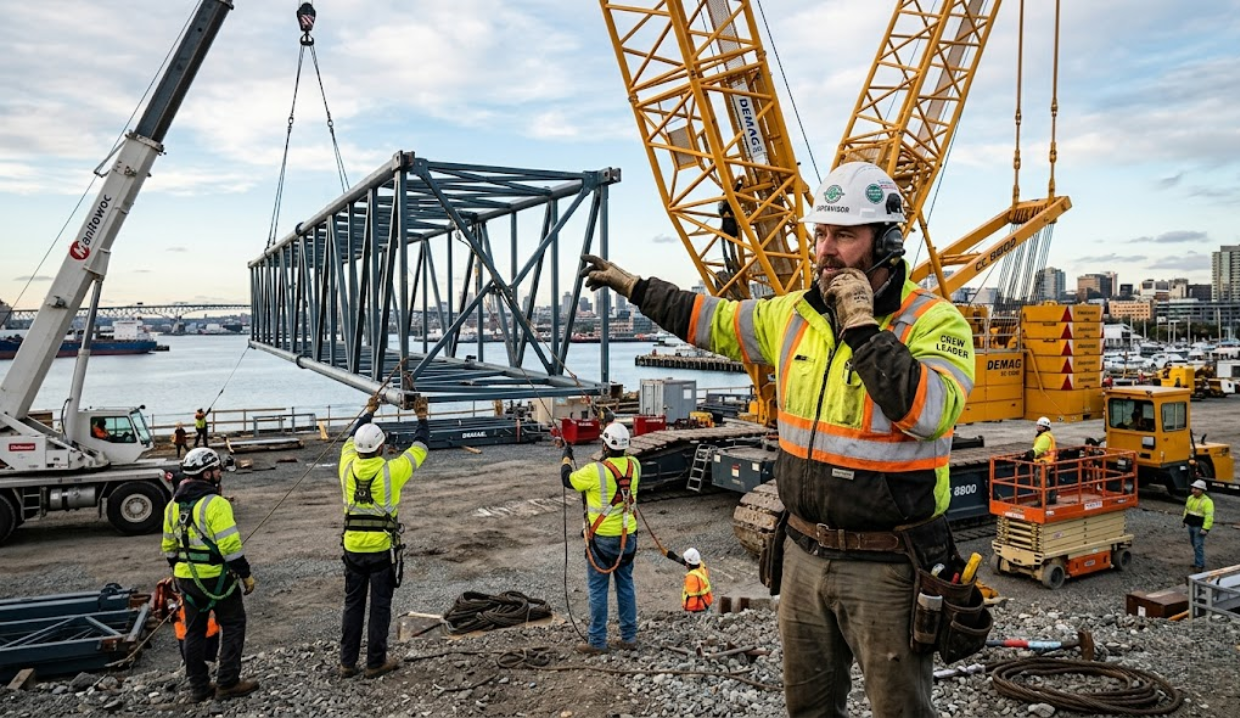
On a large construction project, crane mobilization is often treated as a routine activity. But in reality, it is one of the highest-risk operations on any site.
A single misstep during lifting, pin alignment, or boom installation can lead to catastrophic outcomes—collapsed sections, struck-by incidents, or even fatalities. In most investigations I’ve been part of over the years, one recurring issue appears again and again: lack of proper supervision during critical lifts.
This is exactly where the oversees and directs all crane assembly and disassembly operations role becomes not just important, but absolutely critical to site safety.
In high-risk environments like construction, oil & gas, and heavy industrial shutdowns, crane erection and dismantling require strict HSE control, disciplined communication, and experienced leadership on the ground.
Understanding the Role of Crane Assembly Oversight in HSE
The role of the oversees and directs all crane assembly and disassembly operations is not limited to supervision alone. It is a structured safety function that ensures every stage of crane setup or dismantling is controlled, verified, and compliant with engineering and HSE standards.
From an HSE perspective, this role typically involves:
- Verifying lift plans and engineering approvals
- Ensuring ground stability and load-bearing capacity
- Coordinating lifting teams, riggers, and operators
- Enforcing exclusion zones
- Monitoring weather and environmental conditions
- Confirming the correct sequencing of crane erection or dismantling
In practical terms, this role acts as the final safety barrier before a high-risk lifting activity begins.
Step-by-Step HSE Implementation in Crane Assembly Operations
A disciplined approach is essential when overseeing and directing all crane assembly and disassembly operations that are active on site. Below is a structured field-based approach used in professional HSE systems.
1. Pre-Assembly Planning and Risk Assessment
Before any physical work starts, a detailed risk assessment must be conducted.
Key elements include:
- Ground bearing pressure analysis
- Crane configuration review
- Identification of overhead hazards (power lines, structures)
- Wind speed and weather forecasting
- Lift sequence planning
A Job Safety Analysis (JSA) or Task Risk Assessment (TRA) must be approved before mobilization.
2. Site Setup and Exclusion Zone Control
Once planning is complete, physical control measures are implemented.
This includes:
- Establishing barricaded exclusion zones
- Posting warning signage
- Assigning a banksman or signalman
- Ensuring only authorized personnel enter the lifting area
At this stage, the supervisor oversees and directs all crane assembly and disassembly operations, ensuring that no deviation from the plan occurs.
3. Crane Component Inspection
Every crane part must be inspected before assembly:
- Boom sections
- Pins and locking systems
- Hydraulic lines
- Counterweights
- Wire ropes and sheaves
Any defect, no matter how minor, must be escalated immediately to HSE and engineering teams.
Also read: What does construction safety officer do on site role guides.
4. Controlled Assembly Sequence
Crane erection must follow manufacturer-approved sequences.
Common steps include:
- Base installation and leveling
- Counterweight installation
- Boom assembly and pinning
- Hydraulic system activation
- Functional testing without load
Supervision here is critical because errors in sequencing are a major cause of crane collapse incidents.
5. Final Pre-Operation Safety Verification
Before lifting operations begin:
- Load charts are reviewed again
- Communication systems are tested
- Emergency stop procedures are confirmed
- Permit to Work (PTW) is signed off
Only after this does the supervisor direct all crane assembly and disassembly operations, giving final clearance.
Crane Disassembly Operations: High-Risk Phase Often Ignored
Disassembly is often more dangerous than assembly because fatigue, schedule pressure, and reduced vigilance come into play.
Key HSE Controls During Dismantling:
- Reverse sequencing of erection steps
- Controlled lowering of boom sections
- Stable ground conditions were maintained throughout
- No bypassing of lifting procedures under time pressure
Many incidents occur when teams rush disassembly after project completion. This is where strict enforcement by the overseers and directing all crane assembly and disassembly operations becomes essential.
Risks and Common Mistakes in Crane Operations
From field experience, these are the most frequent failures observed:
1. Inadequate Supervision
Lack of competent oversight leads to miscommunication and unsafe improvisation.
2. Poor Ground Conditions
Soft soil or unverified matting systems can result in crane instability.
3. Ignoring Weather Conditions
Wind gusts during boom lifting are a leading cause of structural failure incidents.
4. Wrong Assembly Sequence
Skipping or altering steps compromises structural integrity.
5. Poor Communication
Radio failures or unclear signals between riggers and operators often trigger near-misses.
Each of these risks reinforces why the oversight and direction of all crane assembly and disassembly operations must be strictly enforced with authority.
Industry Best Practices for Safe Crane Operations
International HSE frameworks consistently recommend the following practices:
Competent Appointed Person
Only trained and certified personnel should manage lifting operations.
Lift Plan Approval System
No crane activity should begin without a documented and approved lift plan.
Toolbox Talks Before Every Lift
Daily briefings reduce miscommunication and align team awareness.
Independent Third-Party Inspection
Cranes should be inspected by qualified third-party engineers before major lifts.
Strict Permit-to-Work System
All lifting activities must operate under a controlled PTW system.
In well-managed sites, the supervisor oversees and directs all crane assembly and disassembly operations, working closely with HSE officers to enforce these controls.
Compliance and Safety Impact
Crane operations fall under strict regulatory control in most industrial environments.
Non-compliance can result in:
- Regulatory penalties and project shutdowns
- Legal liability for site management
- Insurance claim rejection
- Serious injury or fatality investigations
- Loss of contractor certification or prequalification status
From an audit perspective, inspectors always check whether the oversight and direction of all crane assembly and disassembly operations were clearly assigned and documented.
A missing or unclear chain of command is considered a major non-conformance in most HSE audits.
Internal Linking Suggestions
To strengthen site authority and user navigation, this article should internally link to:
- /crane-lifting-safety-procedures
- /job-safety-analysis-hse-guide
- /permit-to-work-system-explained
These connections help build topical relevance around lifting operations and HSE management systems.
FAQS: The Oversees And Directs All Crane Assembly And Disassembly Operations
The appointed person or supervisor overseeing lifting operations ensures safety, supported by HSE officers and engineers.
It involves reverse sequencing, unstable configurations, and reduced attention after project completion.
A lift plan, risk assessment, permit-to-work, and manufacturer assembly procedures are essential.
HSE ensures hazard identification, compliance enforcement, inspection verification, and safe system implementation.
No. It is strictly prohibited. Competent supervision under the oversees and directs all crane assembly and disassembly operations is mandatory.
Conclusion
Crane assembly and disassembly is not just a mechanical task—it is a controlled high-risk operation that demands discipline, experience, and strict supervision.
When the oversees and direction of all crane assembly and disassembly operations are properly implemented, it becomes the backbone of safe lifting execution on any industrial site.
Most crane-related incidents are not due to equipment failure, but due to human error, weak supervision, and poor planning.
Strong HSE leadership, clear procedures, and disciplined execution are what separate safe projects from catastrophic failures.
In the end, safety in crane operations is never accidental—it is managed, verified, and enforced at every step.