
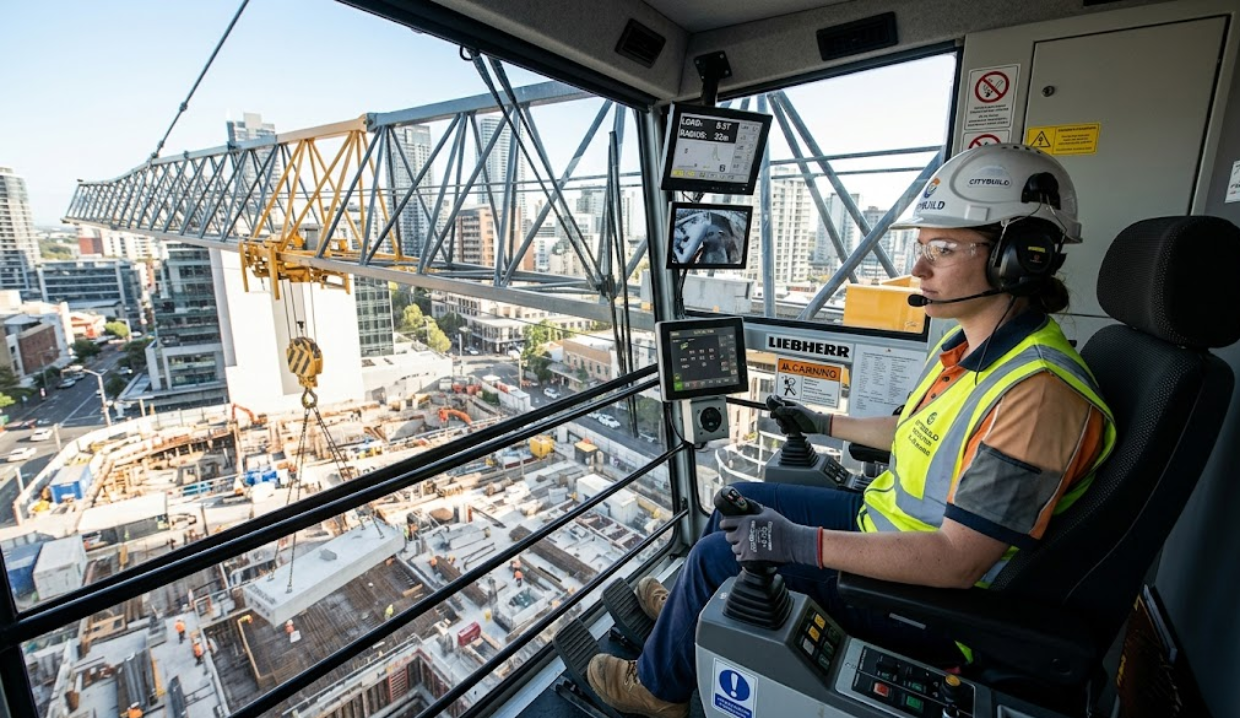
On a busy construction site, a crane is lifting a steel beam over workers, active machinery, and partially completed structures. One small miscommunication between the signaler and operator, and the load starts swinging unexpectedly. For an experienced HSE officer, this is not just a “risk”—it is a potential fatal incident in motion.
Crane operations are among the highest-risk activities in construction, oil & gas, ports, and heavy industrial environments. That’s why learning how to become a crane operator is not just about handling machinery—it is about mastering control, safety awareness, communication discipline, and regulatory compliance.
In my experience working on large-scale industrial projects, crane-related incidents rarely come from machine failure. They come from human error, poor planning, and weak safety culture.
Understanding the Role of a Crane Operator in Modern Industry
To become a crane operator, you need to understand that this role is not mechanical only—it is deeply tied to HSE performance on-site.
A crane operator is responsible for:
- Safe lifting and movement of heavy loads
- Reading lift plans and load charts
- Coordinating with riggers and signalers
- Ensuring exclusion zones are maintained
- Preventing overloading and instability
- Following site-specific safety procedures
In construction and oil & gas environments, crane operators directly influence:
- Site productivity
- Accident prevention
- Equipment integrity
- Compliance with safety audits
A skilled operator is essentially a frontline safety controller.
Step-by-Step Guide to Becoming a Crane Operator
1. Meet Basic Eligibility Requirements
Before you can become a crane operator, most training programs require:
- Minimum secondary education (varies by region)
- Physical fitness and good eyesight
- Basic understanding of workplace safety principles
- Ability to follow technical instructions
Crane operation demands high alertness and coordination. Fatigue or poor judgment can lead to serious incidents.
2. Enroll in Professional Crane Operator Training
Formal training is the foundation. A structured program typically includes:
- Crane types (mobile, tower, overhead, crawler)
- Load dynamics and stability principles
- Signal communication systems
- Emergency response procedures
- Basic mechanical understanding of cranes
From an HSE standpoint, training must also cover:
- Hazard identification in lifting operations
- Risk assessment techniques
- Safe lifting plans
- PPE requirements for lifting zones
Without this foundation, no one should be allowed to become a crane operator in a controlled industrial environment.
3. Obtain Certification and Licensing
Most regions require certification before operating cranes on-site.
Certification ensures:
- Operator competency validation
- Understanding of safety standards
- Legal compliance with labor regulations
Typical certification assessments include:
- Written safety exams
- Practical crane handling tests
- Load calculation evaluations
Without certification, operators cannot legally work on regulated construction or industrial projects.
4. Gain On-Site Practical Experience
Theory is not enough. To truly become a crane operator, hands-on exposure is essential.
On-site learning includes:
- Working under supervision of senior operators
- Assisting rigging teams
- Observing complex lifts
- Learning site-specific safety protocols
In real industrial environments, conditions are unpredictable:
- Wind changes
- Uneven terrain
- Tight lifting zones
- Simultaneous operations (SIMOPS)
Experience builds judgment, and judgment saves lives.
5. Master HSE Procedures and Site Safety Systems
A professional crane operator must operate within strict HSE frameworks:
Key safety systems include:
- Permit to Work (PTW) systems
- Lifting plans and lift categorization
- Toolbox talks before operations
- Exclusion zone enforcement
- Incident reporting procedures
To become a crane operator, you must think like a safety professional—not just a machine handler.
Also read: The Oversees And Directs All Crane Assembly And Disassembly Operations
Risks and Common Mistakes in Crane Operations
In field audits, the same errors appear repeatedly:
1. Poor Communication
Misinterpreted hand signals or radio failure can cause load misalignment.
2. Ignoring Wind and Weather Conditions
High winds significantly increase swing hazards.
3. Overloading the Crane
One of the most dangerous and preventable mistakes.
4. Skipping Pre-Use Inspections
Defective slings, hooks, or hydraulic issues often go unnoticed.
5. Weak Exclusion Zone Control
Workers entering active lifting areas is a recurring violation.
Consequences include:
- Fatal accidents
- Equipment damage
- Project shutdowns
- Regulatory penalties
- Failed safety audits
These are not theoretical risks—they are real-site incidents seen across industries.
Industry Best Practices for Safe Crane Operations
If you want to become a crane operator with a strong professional reputation, follow these proven practices:
1. Always Follow a Lift Plan
No lift should begin without documented planning.
2. Conduct Pre-Operation Safety Checks
Inspect:
- Wire ropes
- Hooks and safety latches
- Brakes and hydraulics
- Control responsiveness
3. Maintain Clear Communication
Use standardized radio protocols and certified signalers only.
4. Respect Load Limits
Never rely on estimation. Always use load charts.
5. Follow Stop Work Authority
Any unsafe condition must halt operations immediately.
These practices align with global HSE expectations and reduce incident rates significantly.
Compliance and Safety Impact in Crane Operations
Crane operations are heavily regulated due to their high-risk nature.
Non-compliance can lead to:
- Legal action
- Heavy fines
- Project shutdowns
- Loss of contractor approval
- Audit failures
For organizations, compliance is not optional—it is a business survival requirement.
From an HSE perspective, proper crane operation contributes to:
- Reduced Lost Time Injuries (LTI)
- Improved safety KPIs
- Strong audit performance
- Better contractor reputation
To successfully become a crane operator, understanding compliance is as important as technical skill.
FAQS: Become a crane operator
It usually takes a few months of training plus on-site experience. Certification duration depends on the training program and region.
Yes. Certification is mandatory in most industries to ensure legal compliance and safety competency.
Load instability, communication failure, overloading, and poor weather conditions are major risks.
Yes. It is a high-demand, skilled role with strong safety responsibility and good long-term career growth.
Hard hat, high-visibility clothing, safety boots, gloves, and hearing protection, depending on site conditions.
Conclusion
Learning how to become a crane operator is not just a career decision—it is a responsibility that directly impacts human life and site safety.
From my experience in industrial and construction environments, the most successful operators are not the fastest or most aggressive—they are the most disciplined, safety-aware, and procedure-driven.
Crane operations will always remain high-risk. But with proper training, strong HSE compliance, and real field experience, those risks can be controlled effectively.
In the end, safe operations are not about machines—they are about people making the right decisions at the right time.