
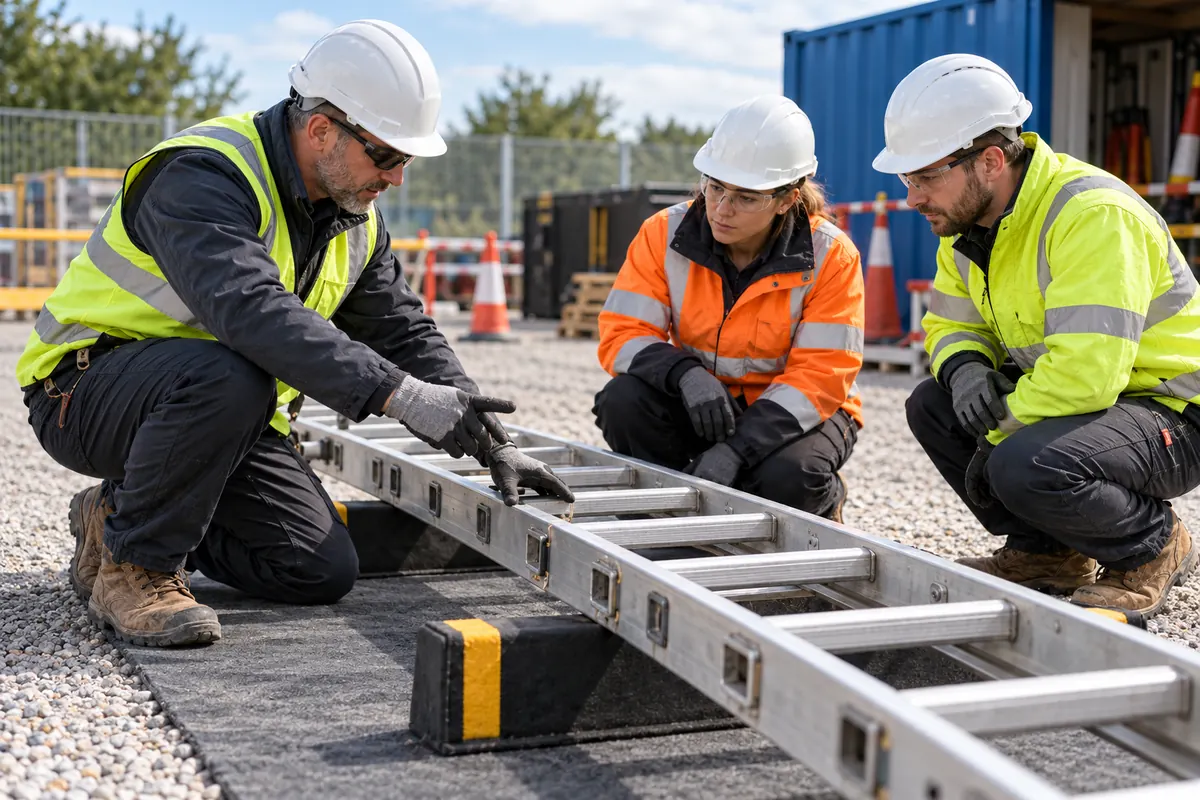
A ladder safety toolbox talk should start with the decision to use a ladder. The first question is whether it is suitable for the task and conditions. Repeating climbing rules cannot make an unsuitable access method acceptable for a job needing prolonged force, heavy materials or a safer work platform.
Prepare the briefing
Use the actual task assessment, ladder instructions and a safe ground-level inspection example. HSE guidance allows ladders as a sensible option for suitable low-risk, short-duration tasks, while cautioning that they should not automatically be the first choice. This original script supports a site-specific briefing, not a universal permission to work from a ladder.
Presenter note: Read the script in a language the crew understands, add today’s task and controls, and pause for answers. The briefing supplements the assessed safe system of work.
Toolbox talk script
Today we will confirm why this ladder is suitable for the task. Check the work height, time, materials and how the job can be done without overreaching or losing a secure position. If the task has changed, we need to review the access method before continuing. A short job can still be high risk when the location or method is wrong.
Inspect the ladder before use using the instructions. Look for damaged stiles, rungs, feet, locking parts and other defects relevant to the type. Report a problem and keep a defective ladder out of use. Do not hide a crack with tape, fit an improvised part or use another person to compensate for a damaged ladder.
Set up and secure the ladder by the assessed method on suitable support. Protect it from doors, vehicles and other activities. Follow the correct climbing and working arrangements, maintain the required contact and keep the body within a safe position. Do not move the ladder while standing on it or stretch to avoid repositioning. If the setup cannot be achieved, stop and arrange suitable access.
Crew understanding questions
| Ask the crew | What to discuss |
|---|---|
| Why is a ladder suitable for this task? | Ask for the assessment decision rather than because it is available. |
| What defect would make us remove it? | Use examples from the actual ladder and its instructions. |
| What could affect the setup during work? | Discuss doors, traffic, weather, ground and other people. |
Discuss a practical scenario
Illustrative discussion: a task now requires two-handed force on a stubborn fitting. Ask whether the original ladder decision still fits the work. Refer the changed method for review rather than asking the worker to balance more carefully.
Close the briefing with clear actions
Record the chosen access method, defects and any changed arrangement. Confirm the people involved understand who controls the work area and when they must stop and reassess.
Record the topic, task, date, presenter, attendance reference and outstanding actions. Use the toolbox talk feedback form to capture unclear points and recheck understanding. Keep competence evidence in the safety training matrix.
Common questions
Does short duration alone make a ladder suitable?
No. Consider the full task, risk and conditions.
Does a past inspection replace a pre-use check?
No. Check the present condition and report defects before use.
Primary sources and applicability
Source jurisdictions are identified below. Confirm current Saudi requirements, the site assessment and applicable manufacturer instructions. No client or regulator approval of this example is claimed.
- HSE: Safe use of ladders and stepladders — Great Britain guidance.
- HSE: Inspecting the condition of ladders — Great Britain guidance.