
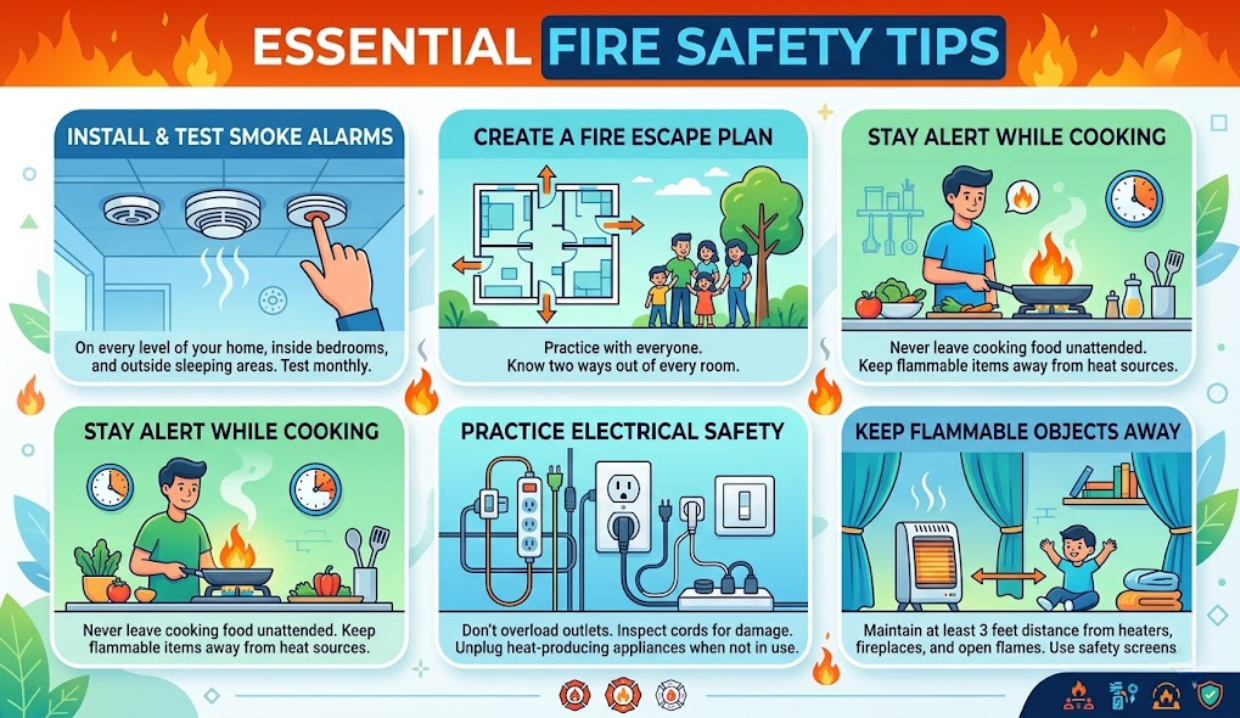
During a routine safety audit on a mid-sized construction site, I once noticed a welding crew working near improperly stored paint thinners. No fire watch, no extinguisher nearby, and poor housekeeping. Situations like this clearly show why fire safety tips are critical in preventing workplace incidents. It took less than 30 seconds for a spark to ignite vapors, resulting in a flash fire that shut down operations for two days.
No fatalities. But significant damage, lost productivity, and a regulatory investigation followed.
This is the reality of poor fire safety practices. Fires don’t usually start because of one big failure—they happen due to small, overlooked hazards stacking up.
Understanding Fire Safety in HSE Context
Fire safety in HSE (Health, Safety & Environment) is not just about extinguishers—it’s a complete system involving:
- Hazard identification
- Risk assessment
- Preventive safety procedures
- Emergency preparedness
- Regulatory compliance
In industrial environments like construction, oil & gas, and manufacturing, fire risks are significantly higher due to:
- Flammable materials
- Hot work activities
- Electrical systems
- Confined spaces
A strong fire safety approach focuses on incident prevention, not just response.
Core Fire Safety Tips for Workplace Safety
1. Conduct Proper Hazard Identification
Every effective fire prevention plan starts with identifying fire hazards:
- Flammable liquids (diesel, solvents, paints)
- Gas cylinders and pipelines
- Electrical panels and overloaded circuits
- Hot work operations (welding, cutting, grinding)
Field Insight:
On oil & gas sites, vapors are often more dangerous than liquids. Vapor cloud explosions are a major cause of catastrophic incidents.
Also read: what does race stand for in fire safety explain safety guide
2. Perform Detailed Risk Assessment
After identifying hazards, assess:
- Likelihood of fire occurrence
- Potential severity (damage, injury, downtime)
- Existing control measures
Use a standard risk matrix to prioritize high-risk areas.
Example:
- Welding near fuel storage → High Risk
- Office electrical load → Medium Risk
3. Maintain Good Housekeeping
Poor housekeeping is one of the top causes of workplace fires.
Ensure:
- No accumulation of combustible waste
- Proper storage of chemicals
- Clear escape routes
- Regular cleaning schedules
Common Observation:
Many incidents occur because oily rags, packaging materials, or debris are left near ignition sources.
4. Implement Safe Hot Work Procedures
Hot work is a leading fire hazard in industrial sites.
Strictly follow:
- Hot Work Permit System
- Fire watch personnel
- Fire-resistant blankets
- Removal of flammable materials
On-Site Practice:
Never allow hot work without a valid permit and inspection. This is a major compliance violation in safety audits.
5. Install and Maintain Fire Protection Equipment
Essential equipment includes:
- Fire extinguishers (ABC, CO₂, Foam)
- Fire alarms and detectors
- Sprinkler systems
- Fire hydrants
Key Rule:
Inspection is more important than installation.
- Monthly visual checks
- Annual servicing
- Pressure gauge verification
6. Ensure Proper Electrical Safety
Electrical faults are a major ignition source.
Check for:
- Overloaded circuits
- Damaged cables
- Improper earthing
- Unauthorized connections
Real Case:
A temporary site office caught fire due to extension boards being overloaded with heaters and computers.
7. Use Appropriate PPE
While PPE does not prevent fire, it reduces injury severity.
Recommended PPE:
- Fire-resistant clothing (FR)
- Gloves
- Face shields
- Safety boots
In oil & gas, FR clothing is mandatory in high-risk zones.
8. Conduct Regular Safety Training and Drills
Training should include:
- Fire extinguisher usage
- Emergency evacuation procedures
- Alarm recognition
- Assembly point awareness
Best Practice:
Conduct fire drills at least every 6 months.
Step-by-Step Practical Implementation on Site
Here’s how a professional HSE team implements fire safety:
Step 1: Site Fire Risk Assessment
- Walkthrough inspection
- Identify ignition sources and fuel loads
- Document findings
Step 2: Develop Fire Safety Plan
- Define emergency procedures
- Assign roles (fire wardens, responders)
- Establish evacuation routes
Step 3: Install Controls
- Fire extinguishers in strategic locations
- Signage and alarms
- Fire-resistant storage
Step 4: Implement Permit Systems
- Hot Work Permit
- Electrical isolation procedures
Step 5: Training and Awareness
- Toolbox talks
- Safety inductions
- Mock drills
Step 6: Monitoring and Safety Audits
- Regular inspections
- Compliance checks
- Incident reporting
Risks and Common Mistakes in Fire Safety
1. Ignoring Small Hazards
Small issues like loose wiring or clutter often lead to major fires.
2. Poor Storage of Flammable Materials
Mixing incompatible chemicals can cause spontaneous ignition.
3. Lack of Emergency Preparedness
No drills or unclear evacuation routes lead to panic during incidents.
4. Expired Fire Extinguishers
Non-functional equipment is a serious compliance failure.
5. Skipping Risk Assessments
Many sites operate without updated fire risk assessments.
Consequences:
- Workplace injuries or fatalities
- Legal penalties and fines
- Project delays
- Loss of reputation
- Insurance claim rejection
Industry Best Practices for Fire Safety
From my experience across multiple industries, these practices consistently reduce fire incidents:
- Apply Hierarchy of Controls (eliminate hazards where possible)
- Use intrinsically safe equipment in hazardous areas
- Implement zoning systems (flammable vs non-flammable areas)
- Conduct behavior-based safety observations
- Integrate fire safety into overall HSE management systems
Compliance and Safety Impact
Fire safety is not optional—it is a legal requirement in most countries.
Organizations must comply with:
- Local fire safety regulations
- Occupational safety laws
- Industry standards
Audit Perspective:
During safety audits, inspectors typically check:
- Fire risk assessments
- Equipment maintenance records
- Training documentation
- Emergency response plans
Non-compliance can result in:
- Shutdown orders
- Heavy fines
- Legal liability
FAQS: Fire Safety Tips
Keep flammable materials controlled, maintain equipment, follow safety procedures, and ensure proper training and emergency readiness.
It prevents injuries, protects assets, ensures compliance, and avoids costly downtime and legal issues.
At least twice a year, or more frequently in high-risk environments like oil & gas or chemical plants.
Electrical faults and poor housekeeping are among the leading causes.
Everyone shares responsibility, but HSE officers, supervisors, and management ensure implementation and compliance.
Conclusion
Fire safety is not about reacting to emergencies—it’s about preventing them before they happen. Every site I’ve worked on that maintained strong hazard identification, strict risk assessment, and disciplined safety procedures had one thing in common: fewer incidents and better operational performance.
In HSE, prevention is always cheaper, safer, and smarter than response.
If you treat fire safety as a daily responsibility—not a checklist—you significantly reduce the chances of an incident that could cost lives, assets, and your organization’s credibility.