
A maintenance technician working in a chemical storage area notices a faint smell of burning plastic. Within seconds, a small electrical fire ignites behind a control panel. The area is busy, visibility is limited, and panic can escalate quickly if the response is not immediate and structured.
This is exactly where fire safety protocols like RACE become critical in real HSE operations.
In high-risk industries such as construction, oil & gas, manufacturing, and warehousing, every second counts. Understanding what does RACE stand for in fire safety is not just theory—it is a life-saving operational procedure that every worker should know and apply instinctively.
What Does RACE Stand for in Fire Safety?
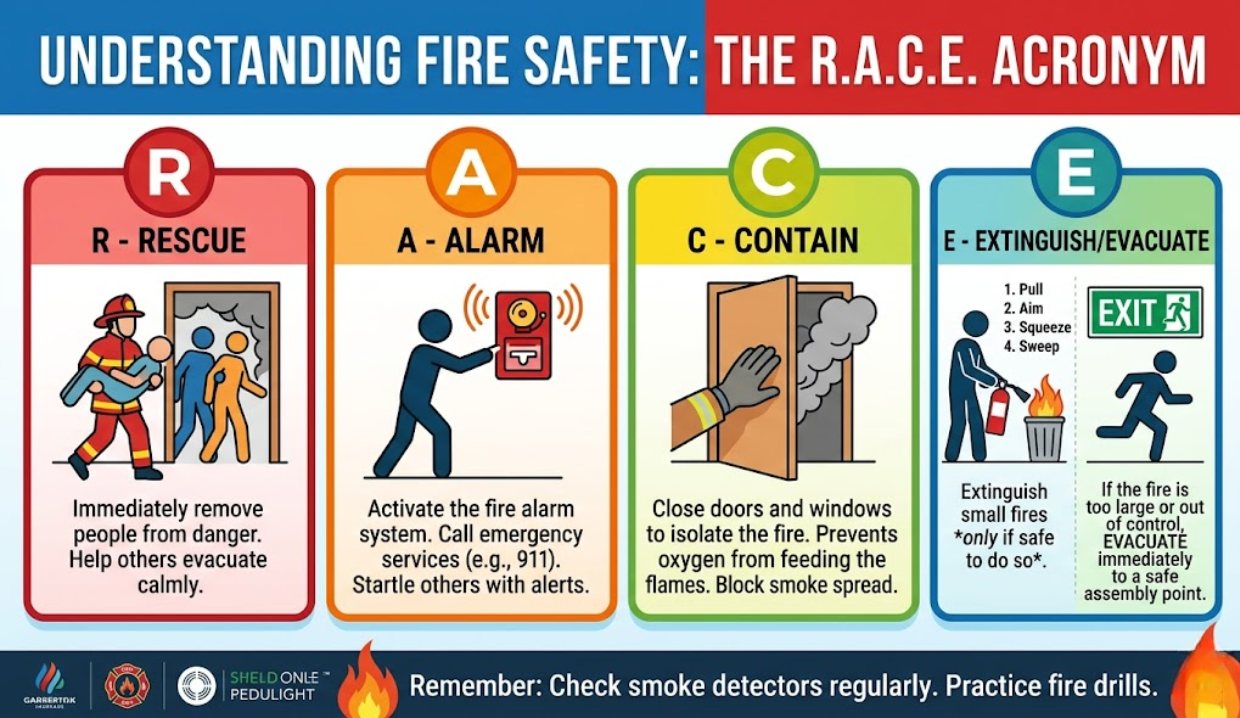
In professional fire safety and HSE training systems, RACE is a widely used emergency response procedure designed to guide personnel during a fire incident.
RACE stands for:
- R – Rescue
- A – Alarm
- C – Contain (or Confine)
- E – Extinguish or Evacuate
When asking what does RACE stand for in fire safety, it is important to understand that it is not just an acronym—it is a structured response hierarchy used in emergency action plans across industries.
Let’s break it down from a real field perspective.
R – Rescue: Saving Lives First
The first priority in any fire situation is human life.
In HSE practice, “Rescue” means removing anyone in immediate danger—only if it is safe to do so.
On-site application:
- Remove injured or trapped personnel if the fire is small and controllable
- Prioritize unconscious or mobility-impaired workers
- Never attempt rescue if it puts your own life at risk
In oil refineries and industrial plants, trained fire wardens are often assigned specific rescue responsibilities as part of emergency preparedness planning.
👉 In real audits, failure to prioritize rescue is a common gap in emergency response drills.
A – Alarm: Raise Immediate Warning
Once rescue is initiated or if the fire is spreading, the next step is to trigger the alarm.
Practical HSE actions:
- Activate fire alarm systems immediately
- Inform the control room or the emergency response team
- Use manual call points if automatic systems fail
Understanding what does RACE stand for in fire safety also means recognizing that early alarm activation reduces response time and prevents escalation.
In construction sites, delayed alarm reporting is one of the leading causes of major fire incidents turning catastrophic.
Also read: How can you become a crane operator for safety training path
C – Contain or Confine the Fire
Containment is a critical control measure used in structured HSE systems.
The goal is simple: stop the fire from spreading.
Field-level actions include:
- Closing doors and fire-rated barriers
- Shutting down ventilation systems
- Isolating fuel or electrical sources
- Using fire doors and compartmentalization systems
In industrial environments, containment is often supported by engineered controls like fire dampers and automatic suppression systems.
When discussing what does RACE stand for in fire safety, containment is the phase that often determines whether the incident remains minor or becomes a major emergency.
E – Extinguish or Evacuate
This final step depends on fire size and risk level.
Extinguish (only if safe):
- Use appropriate fire extinguishers (CO₂, foam, dry powder)
- Follow the PASS technique (Pull, Aim, Squeeze, Sweep)
- Only trained personnel should attempt suppression
Evacuate (when necessary):
- Follow designated escape routes
- Proceed to assembly points
- Avoid lifts and congested exits
In many HSE systems, evacuation takes priority over firefighting when uncertainty exists.
So when professionals ask what does RACE stand for in fire safety, this final step is often the most critical decision point in real emergencies.
Step-by-Step RACE Implementation in HSE Operations
A strong safety system does not rely on memory alone—it relies on drills, training, and repetition.
1. Hazard Identification
- Identify fire risks during routine inspections
- Check electrical panels, flammable storage, and hot work areas
2. Emergency Preparedness
- Conduct fire drills quarterly
- Train staff on RACE procedure
- Assign fire wardens and emergency roles
3. On-Site Response Flow
- Detect fire → Activate RACE immediately
- Rescue if safe → Raise alarm → Contain fire → Extinguish or evacuate
4. Reporting and Documentation
- Record incident details
- Conduct root cause analysis
- Update risk assessment and control measures
Understanding what does RACE stand for in fire safety becomes meaningful only when it is embedded into real operational procedures—not just posters on walls.
Common Mistakes in Fire Safety Response
From real incident investigations and HSE audits, several repeated failures are observed:
1. Delayed Alarm Activation
Workers often attempt to control fire first, wasting critical seconds.
2. Wrong Extinguisher Use
Using water on electrical fires is still a frequent and dangerous mistake.
3. Poor Evacuation Discipline
Panic behavior, blocked exits, and failure to follow assembly procedures.
4. Lack of Training
Untrained workers freezing during emergencies is a major root cause.
These mistakes highlight why understanding what does RACE stand for in fire safety is not optional—it is essential compliance knowledge.
Industry Best Practices for Fire Safety (HSE Perspective)
Experienced HSE professionals follow structured systems rather than reactive behavior.
1. Regular Fire Risk Assessments
Identify ignition sources, fuel loads, and exposure risks.
2. Practical Fire Drills
Not just theoretical drills—simulate real scenarios with time pressure.
3. Clear Emergency Signage
Escape routes must be visible, illuminated, and obstruction-free.
4. PPE Readiness
Fire-resistant clothing, gloves, and respiratory protection where required.
5. Safety Leadership Involvement
Supervisors must lead drills and enforce compliance.
In mature organizations, what does RACE stand for in fire safety is integrated into induction training and refresher programs.
Compliance and Safety Impact
Fire safety is not only an operational concern—it is a legal requirement in most industrial regulations.
Regulatory consequences of poor fire response:
- Heavy penalties and shutdowns
- Insurance claim rejections
- Legal liability in case of injury or fatality
- Loss of operational licenses in severe cases
From an audit perspective, failure to implement structured systems like RACE reflects weak HSE management and poor emergency preparedness.
This is why organizations invest heavily in training employees on what does RACE stand for in fire safety and similar emergency response models.
FAQS: What Does RACE Stand for in Fire Safety?
RACE stands for Rescue, Alarm, Contain, and Extinguish or Evacuate. It is a structured emergency response procedure used in fire situations.
Yes, it is widely used in construction, manufacturing, oil & gas, healthcare, and commercial facilities.
Rescue and Alarm are the most critical initial steps as they protect life and activate emergency response.
Only if they are trained and the fire is small and safe to control. Otherwise, evacuation is the priority.
It provides a clear, structured response that reduces confusion and improves survival rates during fire emergencies.
Conclusion
Fire emergencies are unpredictable, but response should never be.
Understanding what does RACE stand for in fire safety is fundamental for anyone working in high-risk environments. It is not just a training acronym—it is a life-saving decision framework built into modern HSE systems.
When applied correctly, RACE reduces panic, improves coordination, and significantly increases survival chances during fire incidents.
In real workplace safety management, consistency matters more than complexity. And RACE remains one of the most practical tools for achieving that consistency.