
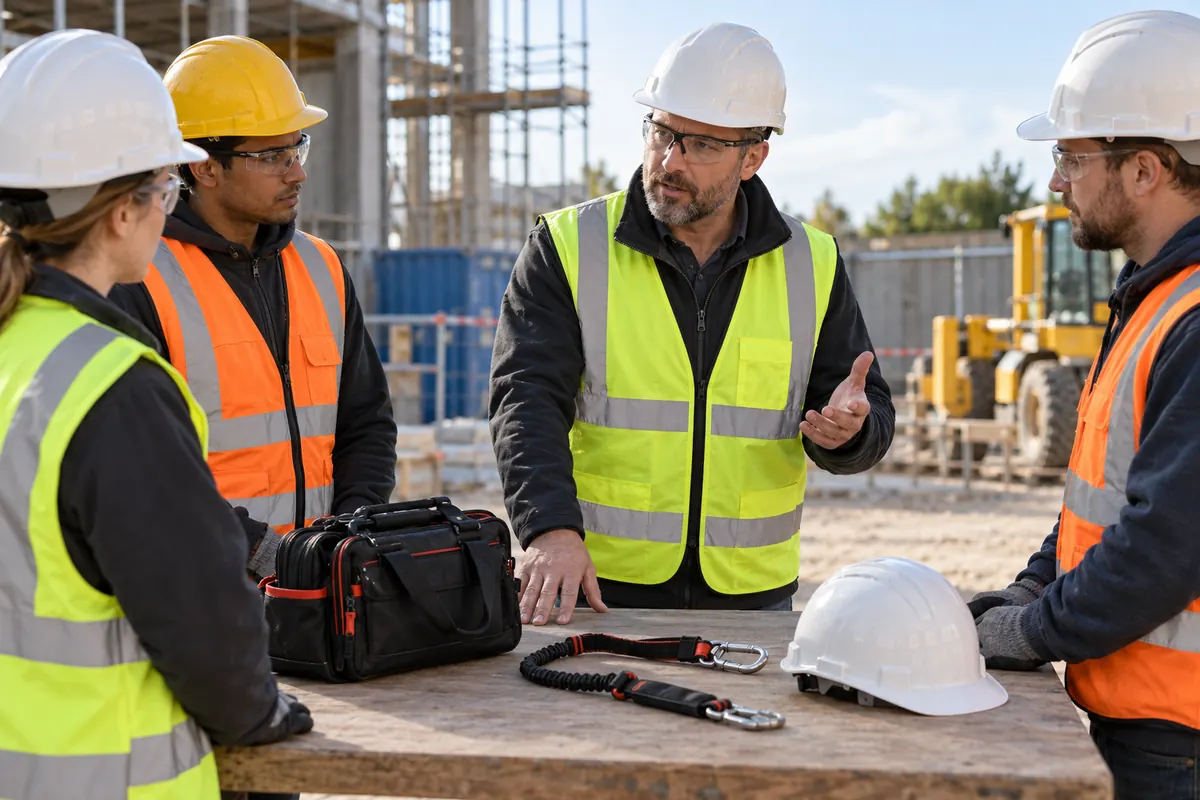
A dropped objects toolbox talk should cover what might fall and who could be below. Tools are only one source. Loose fittings, offcuts, stored materials and items disturbed during access can also create exposure. Plan prevention at the work position and protection of people underneath together.
Prepare the briefing
Review the work area, materials and access route before delivering this original talk. Use only suitable demonstration items at ground level. HSE guidance addresses falling-object risks and protecting people outside construction boundaries. Adapt the discussion to your site assessment and manufacturer instructions for any retention equipment.
Presenter note: Read the script in a language the crew understands, add today’s task and controls, and pause for answers. The briefing supplements the assessed safe system of work.
Toolbox talk script
Today we will check what we are taking to the work position and how it will be secured and stored. Keep only what the task needs, and use the planned containers or retention arrangements. A loose item on an edge can be disturbed by a hand, foot, cable or gust. Good housekeeping must continue as the work changes, not just before the first inspection.
We also need to know who may be below or beside us. Check the assessed exclusion area and who controls access. Never assume that a hard hat makes it acceptable to work beneath an uncontrolled falling-object hazard. Do not remove protection or open a route without the agreed release. Protect visitors and other trades as well as our own crew.
Use tool-retention products only within their instructions and ratings, with suitable attachment points and compatibility. Do not tie random cords around tools or attach them to an unapproved point. If an item falls, warn others and follow the site response process. Keep the area controlled until the cause and remaining loose items have been checked.
Crew understanding questions
| Ask the crew | What to discuss |
|---|---|
| What can fall from today's work? | Include fittings, packaging, offcuts and stored items as well as tools. |
| Who controls the area below? | Identify the actual responsible person and the route-release arrangement. |
| What will we check after a dropped item? | Discuss reporting, remaining items and reassessment before the affected work resumes. |
Discuss a practical scenario
Illustrative discussion: a small bag of fasteners is left on a platform edge while the team changes position. Ask where it should have been stored and whether the area below is protected. Resolve the storage and interface before work begins; do not drop an item as a demonstration.
Close the briefing with clear actions
Record the storage method, required retention arrangements and access controls. Use the crew feedback to identify missing containers or unsuitable equipment. Check that the agreed controls are present at the actual work position.
Record the topic, task, date, presenter, attendance reference and outstanding actions. Use the toolbox talk feedback form to capture unclear points and recheck understanding. Keep competence evidence in the safety training matrix.
Common questions
Do tool tethers remove every dropped-object risk?
No. Consider all objects, storage, handling and people exposed, and use a suitable assessed system.
Can an exclusion zone replace prevention?
Use the full assessed arrangement. Prevent objects falling where practicable and control remaining exposure.
Primary sources and applicability
Source jurisdictions are identified below. Confirm current Saudi requirements, the site assessment and applicable manufacturer instructions. No client or regulator approval of this example is claimed.
- HSE: Protecting the public during construction — Great Britain guidance, including falling objects.