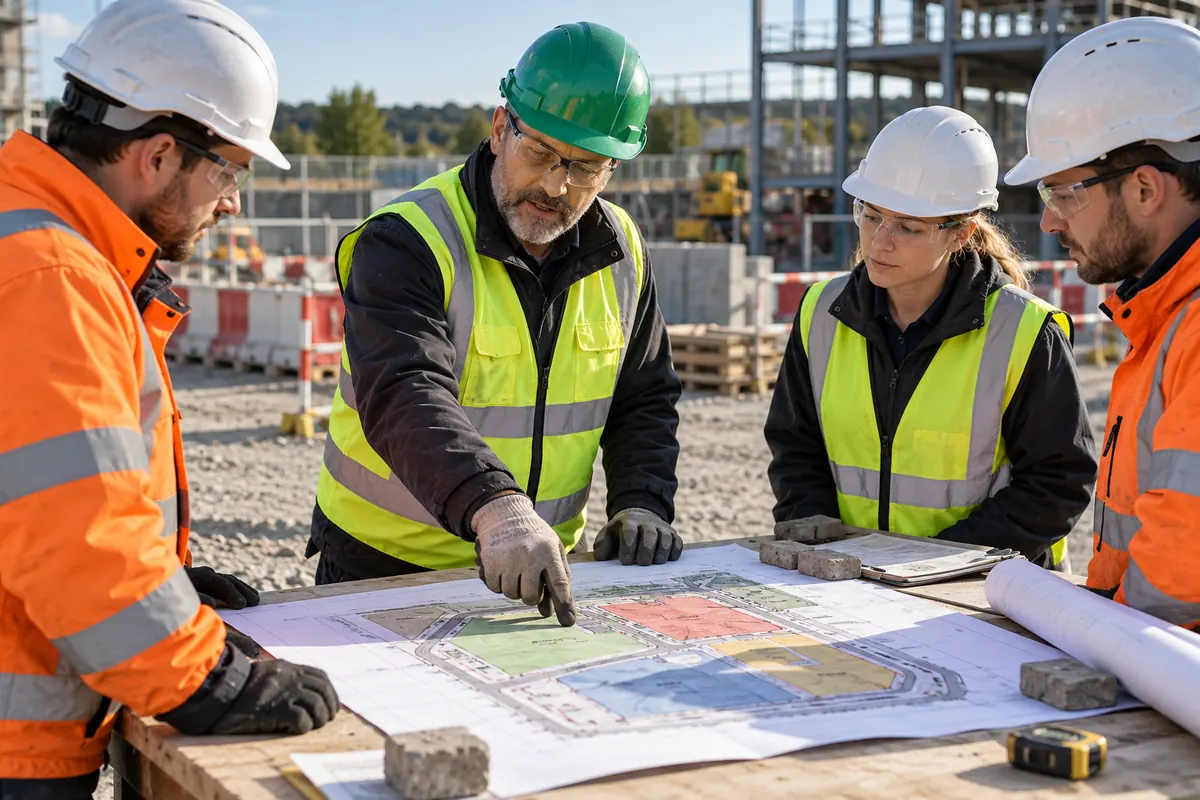
A line of fire toolbox talk should help the crew recognise where movement or released energy could reach them. The position changes as the job progresses. Being clear at the start does not mean a person remains clear when a vehicle reverses, a component shifts or tension is released.
Prepare the briefing
Choose one real task and identify the movement, the source of energy and the people who could be exposed. Deliver this original script in a safe briefing area and replace the examples with the assessed site arrangements. OSHA construction guidance addresses struck-by hazards; this talk supports discussion and does not replace task planning.
Presenter note: Read the script in a language the crew understands, add today’s task and controls, and pause for answers. The briefing supplements the assessed safe system of work.
Toolbox talk script
Before we start, look at what can move and where it could go. A load may swing, a vehicle may turn, a component may roll and a pressurised part may release energy. Do not judge the hazard only by the position you see while everything is still. We need to understand the possible path and keep people clear through the whole task.
Today we will identify our operating area, the people authorised inside it and the agreed safe positions. Barriers and separation must match the work. Do not enter a restricted area because the operator appears to have stopped briefly. Use the agreed communication and wait for the proper release. If you lose communication or cannot confirm the arrangement, stop the affected activity and ask the supervisor.
Think about the next step, not only your own movement. Where will your hands and body be when the component settles or the restraint is released? Do not reach into a pinch point or stand between moving equipment and a fixed object. If the planned position is not workable, tell us before the task starts so the method can be changed.
Crew understanding questions
| Ask the crew | What to discuss |
|---|---|
| What could move in today's task? | Ask the crew to identify the actual equipment, material or energy source. |
| Where are the agreed safe positions? | Have people explain the task-specific boundary and who controls access. |
| What changes would make us stop? | Discuss lost communication, an unexpected person or a changed load or work area. |
Discuss a practical scenario
Illustrative discussion: a worker wants to steady a component by standing between it and a column. Ask what happens if it shifts. Use the answer to review the positioning and handling method with the competent supervisor. Do not demonstrate the risk by moving the component towards anyone.
Close the briefing with clear actions
Record the agreed positions, access owner and any method change. Check understanding with individual answers rather than a group yes. Revisit the boundary when another trade enters or the work sequence changes.
Record the topic, task, date, presenter, attendance reference and outstanding actions. Use the toolbox talk feedback form to capture unclear points and recheck understanding. Keep competence evidence in the safety training matrix.
Common questions
Is line of fire only about cranes?
No. Apply the discussion to vehicles, materials, tools and other movement or released energy relevant to the work.
Is PPE enough?
PPE does not replace eliminating exposure or controlling movement and access. Use the assessed controls.
Primary sources and applicability
Source jurisdictions are identified below. Confirm current Saudi requirements, the site assessment and applicable manufacturer instructions. No client or regulator approval of this example is claimed.
- OSHA: Construction struck-by hazards — United States guidance.