
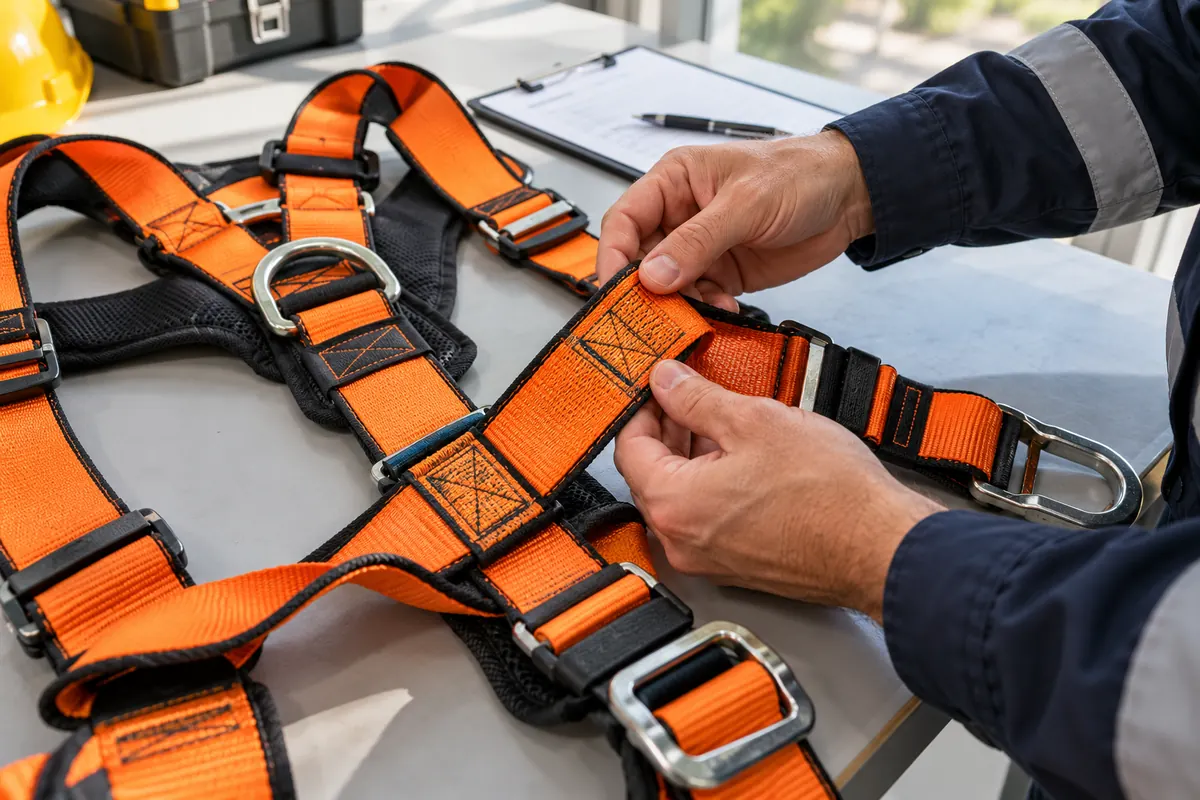
A full body harness inspection checklist should help identify the equipment, record its condition and keep doubtful items out of use. It must match the harness model and manufacturer instructions. A generic sheet cannot decide that every cut, stain or worn area is acceptable, and a monthly colour code cannot replace pre-use checks.
Before using the checklist
Separate the wearer's pre-use check from the documented inspection regime established by the employer. HSE INDG367 discusses inspection of webbing and rope fall-arrest equipment and advises consulting the manufacturer for product-specific requirements. Use the correct instructions, competent inspection and equipment history. This guide does not prescribe a universal monthly interval or service life for all harnesses.
Copy and adapt: Use this original checklist within your controlled site process. Add the applicable references and retain evidence for each decision.
Full Body Harness Inspection Checklist and Register
| Review item | What to confirm or record |
|---|---|
| Identification | Confirm manufacturer, model, unique ID and readable labels so the correct instructions and history can be checked. |
| Service history | Review issue date, previous inspections, known loading events and any exposure or damage reports. |
| Webbing | Inspect accessible surfaces for cuts, abrasion, burns, chemical effects or other deterioration using the product instructions. |
| Stitching | Look for broken, pulled, missing or otherwise suspect stitching without altering the equipment. |
| Metal components | Check D-rings, buckles and adjustment parts for deformation, damage or corrosion. |
| Operation | Check adjustments and closures by the specified method; do not force or modify components. |
| Indicators and accessories | Inspect any model-specific indicators and components identified by the manufacturer. |
| Decision and record | Record findings, inspector, date and disposition; quarantine doubtful equipment pending competent decision. |
A worked example
Illustrative example: a harness has an intact inspection tag but an unreadable identification label. The inspector cannot reliably match it to its history and instructions. It is taken out of service and referred for a competent decision. Writing a new identification number on the webbing would not restore missing manufacturer information or establish its history.
Follow-up and records
A useful register includes equipment ID, model, inspection type, date, findings, decision, inspector and next review due under the applicable regime. Record the reason for removal rather than just failed. After a fall or suspected damaging event, remove the equipment from use and follow the manufacturer process. Do not clean, repair or return a harness using an improvised method.
Record the date, location or asset, findings, action owner, due or hold point and closure evidence. Use Yes / No / Not applicable only with a reason where needed. A blank or unexplained tick should not hide an unresolved concern.
Track outstanding actions in your daily safety officer report. Review recurring problems through your safety committee action log.
Common questions
Is a monthly inspection always required?
No universal monthly interval is set here. Confirm the applicable regime, use conditions and product instructions, alongside pre-use checks.
Can an inspection sheet approve the complete fall-protection system?
No. Harness condition is one part of a system that also needs suitable anchors, compatibility, clearance, training and rescue arrangements.
Sources and applicability
The sources below identify their own jurisdictions or product scope. Confirm current Saudi requirements, your client procedures and relevant manufacturer instructions before adopting this example. No regulator or client approval of this checklist is claimed.
- HSE INDG367: Inspecting fall arrest equipment — Great Britain guidance; consult the product manufacturer.