
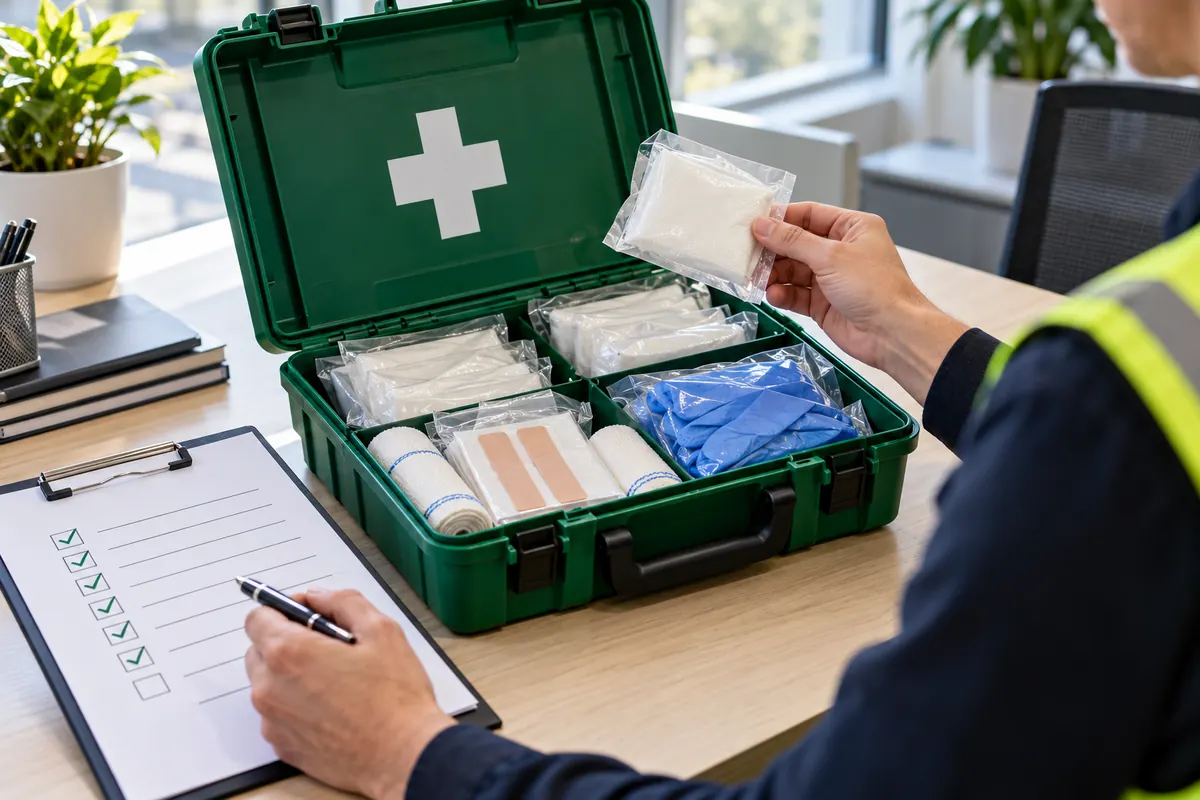
A first aid kit inspection checklist should confirm that the right supplies are available where people need them. Counting bandages is only part of the job. A fully stocked kit behind a locked door or in an unknown location may be unavailable when someone asks for help.
Before using the checklist
Use the workplace first-aid needs assessment to establish the kit locations, contents and quantities. HSE guidance for Great Britain recommends checking kits regularly and replacing expired items. It does not provide a single contents list suitable for every hazard and workforce. Confirm current local requirements for your workplace, including any additional specialist provision identified by the assessment.
Copy and adapt: Use this original checklist within your controlled site process. Add the applicable references and retain evidence for each decision.
First Aid Kit Inspection Checklist and Record
| Review item | What to confirm or record |
|---|---|
| Identification | Record the kit ID, exact location, inspection date and inspector. |
| Access | Check the kit can be reached during all relevant shifts and is clearly identified. |
| Case condition | Inspect the container for damage, contamination, moisture and secure closure. |
| Stock standard | Compare actual contents with the approved site inventory, not a remembered generic list. |
| Packaging and dates | Check sterile packaging is intact and items are within applicable expiry dates. |
| Usability | Check undated non-sterile items remain fit for purpose and seek manufacturer advice where needed. |
| Supporting information | Check the required first-aid contact and emergency information is current and accessible. |
| Replenishment | List shortages and unsuitable items, assign an owner and verify replacement. |
A worked example
Illustrative example: a warehouse kit contains enough dressings, but two sterile packs have torn wrappers and the contact sheet names a person who has left. The inspection records both issues. The owner replaces the affected packs and updates the information. A quantity-only tick would have missed the condition and communication problems.
Follow-up and records
Use a stock table with item, required quantity, available usable quantity, expiry where applicable and action. Keep patient details out of this stock record. Review after use and replenish promptly. If a kit cannot provide the assessed provision, notify the responsible person and arrange suitable interim cover rather than leaving a shortage until the next planned inspection.
Record the date, location or asset, findings, action owner, due or hold point and closure evidence. Use Yes / No / Not applicable only with a reason where needed. A blank or unexplained tick should not hide an unresolved concern.
Track outstanding actions in your daily safety officer report. Review recurring problems through your safety committee action log.
Common questions
Must every kit contain the same items?
No. Base the stock on the needs assessment and applicable requirements. This article is a readiness checklist, not a prescription of kit contents.
Is a monthly tick enough after the kit has been used?
No. Used or depleted supplies need prompt replenishment; set the routine interval to suit the workplace and applicable requirements.
Sources and applicability
The sources below identify their own jurisdictions or product scope. Confirm current Saudi requirements, your client procedures and relevant manufacturer instructions before adopting this example. No regulator or client approval of this checklist is claimed.
- HSE: What to put in a first aid kit — Great Britain guidance.