
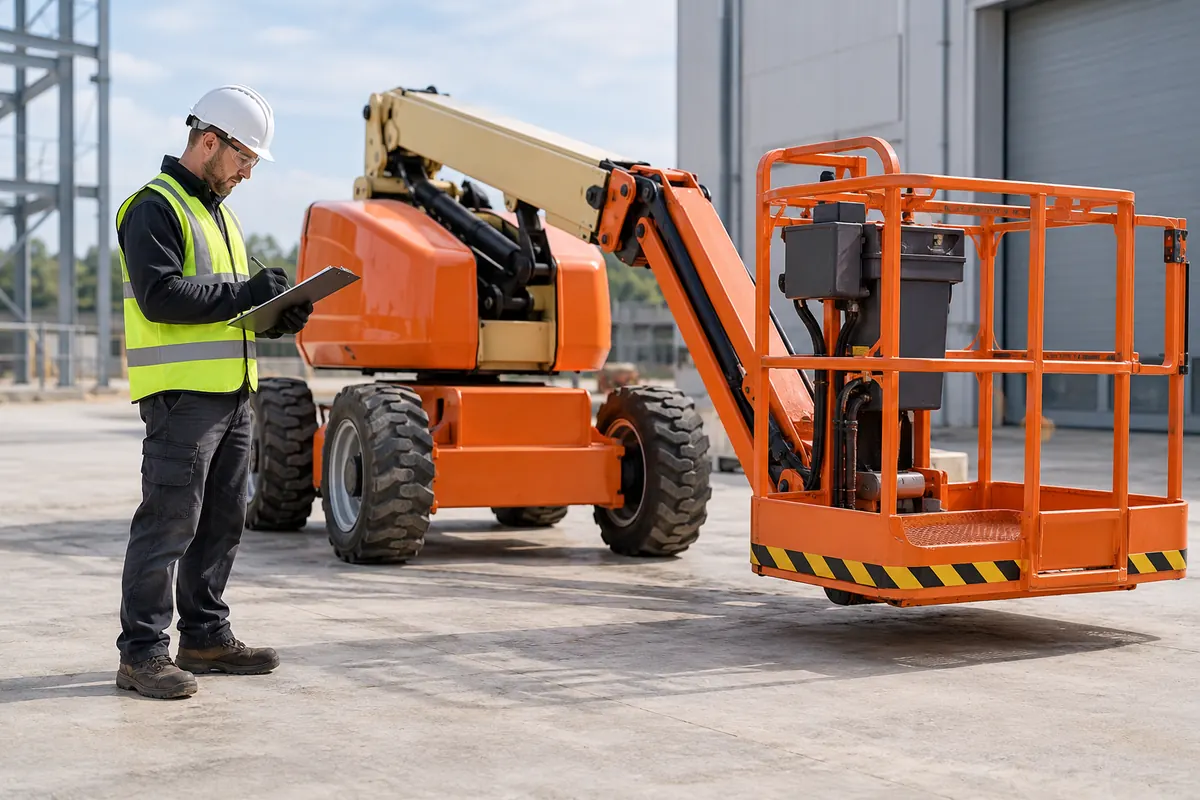
A MEWP pre-use inspection checklist helps the operator identify a problem before the platform is put to work. Use the checklist supplied for the actual machine, then record defects clearly. A generic list can organise the review, but it cannot cover every control, interlock or inspection point on every boom or scissor lift.
Before using the template
Confirm the machine identity and obtain its current operator instructions. Complete the required visual and function checks from a safe position, in the sequence specified by the manufacturer. HSE guidance covers selecting and managing MEWPs and the need to plan safe use. Keep the machine check distinct from the site assessment: a machine without an obvious defect may still be unsuitable for the ground, reach or work environment.
Copy and adapt: Add the actual task, asset or location, relevant instructions and the person responsible for each decision. This original template supports the site process.
Practical review checklist
| Review item | What to confirm or record |
|---|---|
| Identity and instructions | Match the model and asset ID to the instructions and required inspection records. |
| Structure and platform | Check accessible structural parts, guardrails, gate and platform floor using the machine checklist. |
| Tyres and supports | Check tyres, wheels, stabilisers or other support components applicable to the model. |
| Leaks and services | Look for visible leaks, damaged hoses, loose parts or other signs of deterioration without entering unsafe areas. |
| Controls and safety devices | Perform the specified checks of controls, emergency stops, alarms and relevant safety systems. |
| Lowering arrangements | Verify the machine-specific emergency and auxiliary arrangements through the authorised pre-use process. |
| Worksite suitability | Confirm the assessed ground, overhead obstructions, traffic controls and environmental limits before use. |
| Defect decision | Record the actual defect, remove the machine from use where required and notify the responsible person. |
A worked planning example
Illustrative example: the inspection label is current, but a damaged platform gate does not close as intended. The operator reports the defect and keeps the machine out of service. A previous inspection cannot establish that damage occurring afterwards is acceptable. The competent repair and return-to-service process determines what happens next.
Follow-up and records
Record the date, operator, asset, result and defect reference. Do not simply write checked when a problem remains open. Keep the defect visible to the next shift and obtain the required release after repair. Changes in machine, ground or task need a fresh review of suitability. Do not bypass a safety device to finish the job.
Keep the date, finding, action owner, due or hold point and closure evidence traceable. Record a reason for not applicable items. Escalate unresolved safety concerns before releasing the affected work.
Track outstanding actions in the daily safety officer report and review repeated issues through the safety committee action log.
Common questions
Does a current certificate replace the pre-use check?
No. Check present condition and required functions before use using the actual machine instructions.
Can this checklist authorise the operator?
No. Training, familiarisation, site authorisation and the task assessment remain separate requirements.
Primary sources and applicability
Source jurisdictions are identified below. Confirm current Saudi requirements, the site assessment and applicable manufacturer instructions. No client or regulator approval of this example is claimed.
- HSE GEIS6: Selection, management and use of MEWPs — Great Britain guidance.
- HSE: Mobile elevating work platforms — Great Britain construction guidance.