
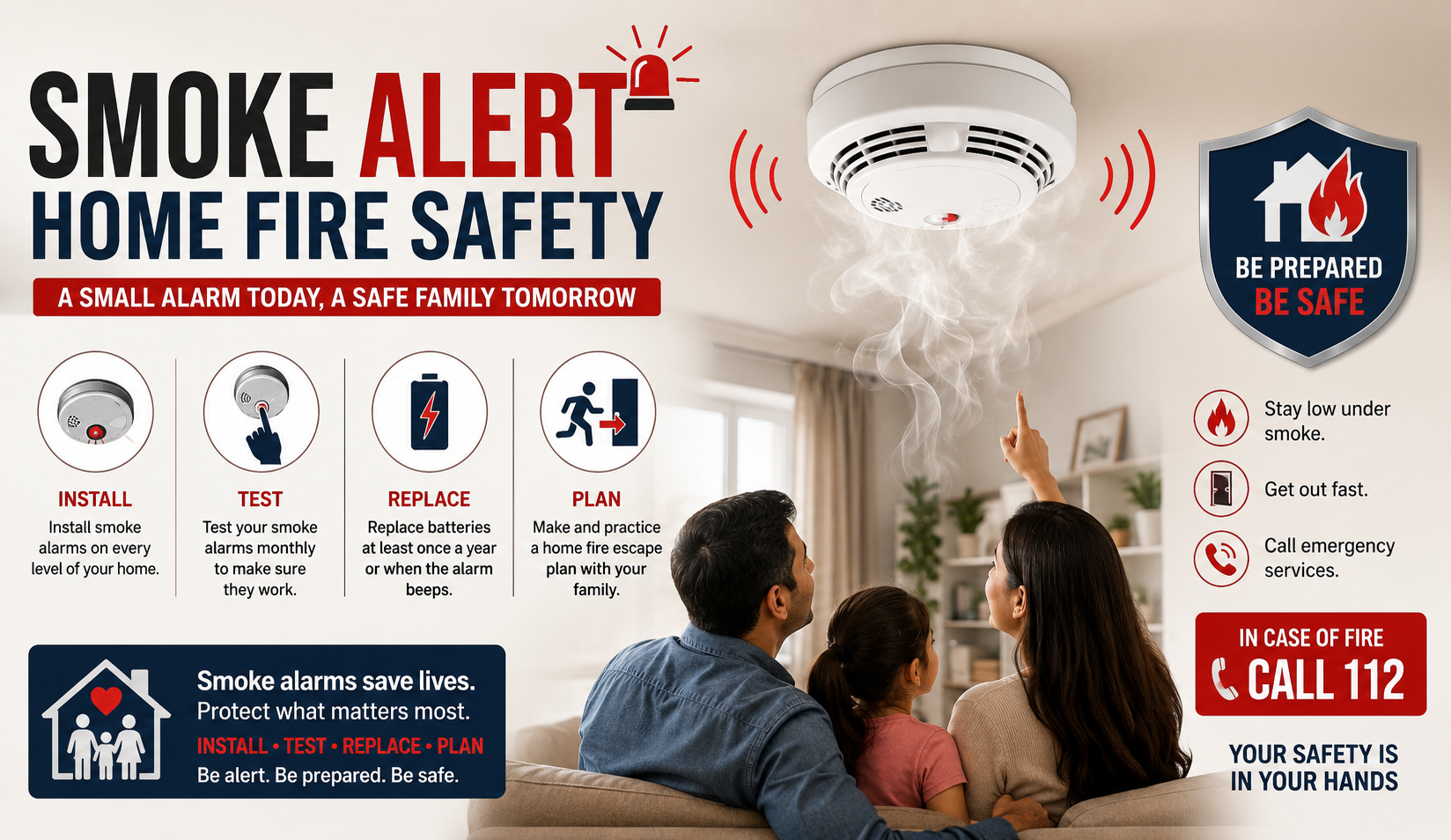
During a routine residential safety awareness visit, a case was reviewed where a small electrical fault in a home kitchen led to dense smoke buildup within minutes. The occupants were asleep, and the only reason they escaped safely was a functioning smoke detection system that triggered an early alarm.
The investigation later revealed multiple safety gaps—overloaded sockets, poor wiring maintenance, and a lack of fire extinguisher training. From an HSE perspective, this was a textbook example of how weak hazard identification and delayed response can escalate a minor fault into a life-threatening incident.
This is exactly where smoke alert home fire safety becomes a critical part of both residential safety planning and broader HSE awareness. Whether in industrial housing colonies, construction camps, or standard residential settings, early smoke detection is the first line of defense against fire-related fatalities.
Understanding Smoke Alert Home Fire Safety in HSE Context
From an HSE standpoint, smoke alert home fire safety is not just about installing alarms—it is a structured risk control system that integrates detection, response, and prevention.
It involves:
- Early identification of smoke or combustion particles
- Immediate alert systems (audible/visual alarms)
- Evacuation readiness procedures
- Integration with fire response planning
In workplace safety culture, similar principles are applied in high-risk environments like oil & gas facilities, warehouses, and construction sites. The same discipline is now increasingly important in residential safety management.
A properly designed smoke alert home fire safety system reduces response time, which is the most critical factor in preventing fire fatalities.
Common Fire Hazards in Residential and Site Housing Areas
In HSE inspections across residential camps and housing units, several recurring hazards are observed:
1. Electrical Faults
Loose wiring, overloaded extension boards, and unmaintained appliances are leading ignition sources.
2. Kitchen-Related Fires
Unattended cooking, gas leaks, and improper ventilation often trigger smoke buildup.
3. Smoking and Open Flames
Cigarettes, candles, and incense sticks placed near flammable materials increase risk significantly.
4. Poor Housekeeping
Cluttered storage areas reduce escape routes and increase fire spread speed.
5. Absence of Detection Systems
Lack of smoke alert home fire safety devices delays response and increases damage severity.
From a risk assessment perspective, these hazards fall under “high probability, high consequence” scenarios, especially in densely populated living environments.
Step-by-Step Implementation of Smoke Alert Home Fire Safety System
A structured HSE approach ensures proper implementation and long-term reliability.
Step 1: Site Risk Assessment
Conduct a basic fire risk assessment covering:
- Electrical systems condition
- Gas line inspection
- Occupancy density
- Escape route accessibility
This forms the baseline for designing smoke alert home fire safety coverage.
Step 2: Strategic Installation of Smoke Detectors
Install smoke detectors in:
- Bedrooms
- Hallways
- Kitchens (heat-resistant models preferred)
- Staircases or exit corridors
Ensure devices comply with manufacturer specifications and are tested monthly.
Also read: Why fire safety inspection companies matter for workplace HSE
Step 3: Alarm System Testing and Maintenance
Regular testing is essential:
- Weekly alarm sound checks
- Battery replacement every 6–12 months
- Dust cleaning to avoid false alarms
Neglecting maintenance is one of the most common failures observed in smoke alert home fire safety systems.
Step 4: Emergency Evacuation Planning
Every household or residential block should have:
- Clearly marked exit routes
- A designated assembly point
- Family or occupant evacuation drills
In industrial housing setups, this mirrors formal emergency response procedures used in HSE management systems.
Step 5: Fire Response Equipment Availability
At minimum:
- Portable fire extinguishers (ABC type)
- Fire blankets in kitchens
- Basic first aid kits
These tools support early-stage fire suppression before escalation.
Risks and Common Mistakes in Fire Safety Management
Despite awareness, several mistakes continue to compromise smoke alert home fire safety systems:
Ignoring Alarm Alerts
One of the most dangerous behaviors is disabling alarms due to nuisance beeping.
Poor Battery Maintenance
Dead or missing batteries render smoke detectors useless.
Blocking Escape Routes
Furniture or storage blocking exits increases fatality risk.
Lack of Training
Occupants often do not know how to respond when alarms activate.
Over-Reliance on Devices Alone
Technology without behavioral safety awareness creates a false sense of security.
In HSE audits, these issues are often classified as “human factor failures,” which are preventable through proper training and awareness programs.
Industry Best Practices for Fire Risk Reduction
From a professional HSE perspective, fire safety should always follow layered protection principles:
1. Engineering Controls
- Proper wiring standards
- Gas leak prevention systems
- Fire-resistant materials in construction
2. Administrative Controls
- Safety awareness training
- Emergency drills
- Inspection checklists
3. Personal Safety Practices
- Avoiding overloaded sockets
- Safe cooking practices
- Responsible use of open flames
Integrating smoke alert home fire safety into these three control layers significantly improves overall risk mitigation.
Compliance and Safety Impact
While residential fire safety is often considered personal responsibility, regulatory frameworks increasingly emphasize structured fire prevention measures in multi-occupancy buildings and worker accommodations.
Failure to maintain proper smoke alert home fire safety systems can lead to:
- Legal penalties in regulated housing projects
- Insurance claim rejections
- Operational shutdowns in corporate housing facilities
- Increased liability in case of fatalities
From an HSE audit perspective, fire safety readiness is a key compliance indicator during inspections.
Organizations managing residential camps or employee housing must treat fire safety as part of their overall safety management system, not an optional feature.
FAQS: Smoke Alert Home Fire Safety
It refers to the use of smoke detection systems and safety procedures to identify fire risks early and trigger timely evacuation or response actions.
They should be tested at least once a week, with full maintenance checks every 3–6 months, depending on usage conditions.
They should be installed in bedrooms, hallways, kitchens, and near exit routes for maximum coverage.
Electrical faults, unattended cooking, and improper use of heating devices are the most common causes.
In many regulated housing and commercial residential settings, fire detection systems are mandatory under safety compliance requirements.
Conclusion
Fire incidents rarely occur without warning signs, but the speed of detection determines the outcome. A properly implemented smoke alert home fire safety system acts as the first critical barrier between a small hazard and a major disaster.
From an HSE perspective, effective fire safety is built on three pillars: early detection, rapid response, and disciplined safety behavior. When these elements are aligned, the risk of fire-related injuries and property loss reduces significantly.
Ultimately, fire safety is not just a technical requirement—it is a behavioral and organizational responsibility that must be embedded into daily living and safety culture.