
In real workplace environments, fire emergencies don’t come with warnings. I’ve seen situations in construction sites where a small electrical spark turned into a full fire risk within seconds. In those moments, the difference between control and disaster often comes down to one simple trained action—knowing how to use a fire extinguisher correctly.
This is where understanding what does PASS stand for in fire safety becomes critical for every HSE officer, site supervisor, and worker on the ground.
PASS is not just a theory—it is a practical emergency response method used globally in fire safety procedures. When applied correctly, it helps control small fires before they escalate into major incidents, injuries, or operational shutdowns.
Understanding What PASS Stands for in Fire Safety
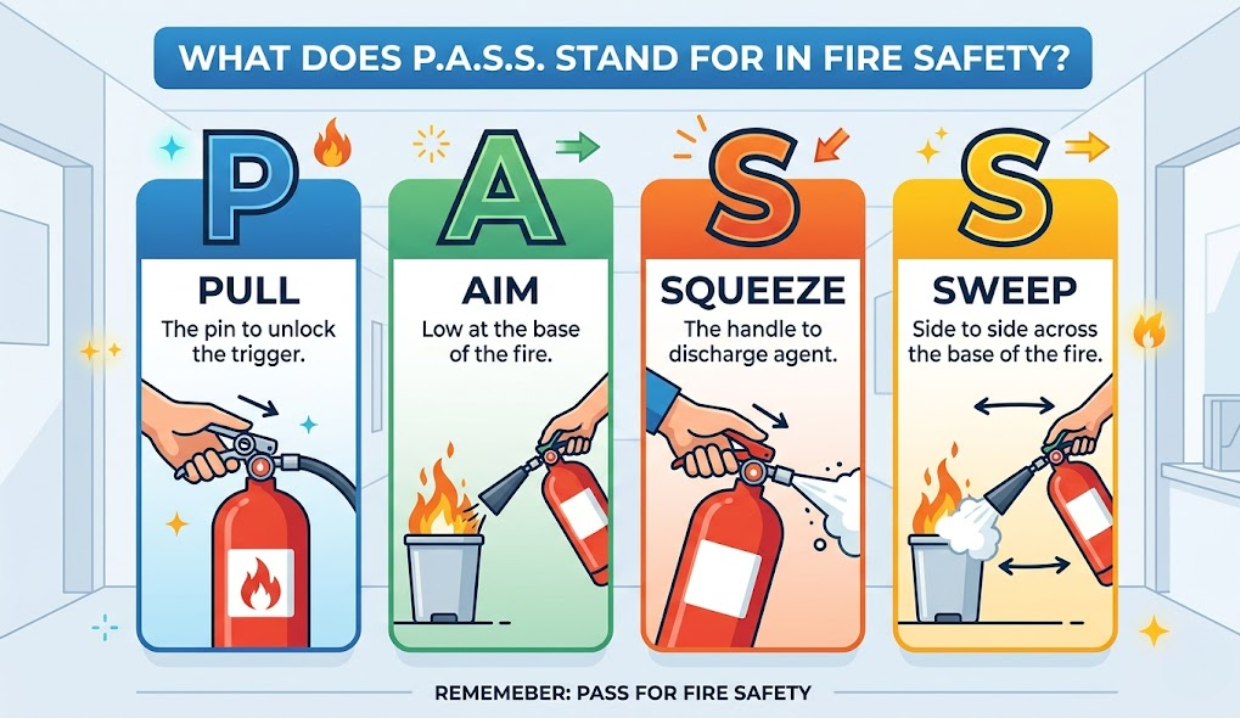
The acronym PASS is a standardized fire extinguisher operation technique used in emergencies.
PASS stands for:
- P – Pull the pin
- A – Aim at the base of the fire
- S – Squeeze the handle
- S – Sweep side to side
This simple sequence is designed to ensure that even a non-specialist worker can respond quickly during an early-stage fire.
When we talk about what does PASS stand for in fire safety, we are referring to this exact method that is part of basic HSE training in industries like construction, oil & gas, warehousing, and manufacturing.
The goal is not just memorization—it’s controlled, correct execution under pressure.
Step-by-Step Breakdown of PASS Fire Safety Technique
Understanding theory is not enough. In real HSE practice, execution matters more than knowledge.
P – Pull the Pin
Every fire extinguisher has a safety pin that prevents accidental discharge. In an emergency:
- Hold the extinguisher upright
- Pull the pin firmly
- Break the tamper seal if present
This step prepares the extinguisher for use.
A – Aim at the Base
One of the most common mistakes in fire response is aiming at flames instead of the source.
In what does PASS stand for in fire safety training, emphasis is always on:
- Aiming at the base of the fire
- Keeping a safe distance (usually 6–10 feet, depending on extinguisher type)
S – Squeeze the Handle
Once aimed correctly:
- Squeeze the handle slowly and steadily
- Maintain control of pressure
- Avoid sudden bursts that reduce efficiency
Also read: How does fire escape safety ensure workplace survival plan guide 2026
S – Sweep Side to Side
- Sweep the nozzle horizontally
- Cover the entire base of the fire
- Continue until flames are fully extinguished
This step ensures the fire does not reignite.
Real Workplace Application of PASS in HSE Environments
From a field perspective, understanding what does PASS stand for in fire safety becomes critical in high-risk environments.
Construction Sites
Common fire risks include:
- Electrical wiring faults
- Welding sparks
- Flammable materials like paint or fuel
On-site workers trained in PASS can immediately control small fires before evacuation becomes necessary.
Oil & Gas Facilities
In refinery environments:
- Hydrocarbon leaks
- High-pressure systems
- Ignition sources
Here, PASS is part of the first-response fire control before emergency shutdown systems activate.
Warehouses & Manufacturing Units
Typical risks include:
- Forklift battery fires
- Packaging material ignition
- Electrical panel faults
In such settings, trained staff using PASS can prevent large-scale inventory loss.
Risks and Common Mistakes in PASS Fire Safety Use
Even though PASS is simple, real-life application often fails due to poor training or panic.
1. Aiming at Flames Instead of Base
This is the most common mistake and reduces extinguisher effectiveness.
2. Standing Too Close
Workers often get too close, risking burns or smoke inhalation.
3. Using the Wrong Extinguisher Type
Not all extinguishers are suitable for all fires (electrical, chemical, or oil-based).
4. Delayed Response
Time is critical. A 10–15 second delay can turn a small fire into a major incident.
5. Lack of Training
Many workers know what does PASS stand for in fire safety, but cannot execute it under pressure.
These mistakes often lead to:
- Workplace injuries
- Equipment damage
- Operational shutdowns
- Regulatory penalties
Industry Best Practices for PASS Fire Safety Execution
In professional HSE systems, PASS is not taught alone—it is part of a wider fire safety framework.
1. Regular Fire Drills
- Monthly or quarterly drills
- Real-time simulation of fire scenarios
- Role-based emergency assignments
2. Equipment Inspection
Fire extinguishers must be:
- Checked for pressure levels
- Inspected for accessibility
- Maintained according to safety schedules
3. Clear Emergency Routes
- Marked evacuation paths
- Unblocked exits
- Visible signage
4. PPE Compliance
Even during a fire response:
- Heat-resistant gloves
- Safety helmets
- Eye protection
5. Training & Certification
Workers must understand not just what does PASS stand for in fire safety, but also:
- Fire classes (A, B, C, D, K)
- Risk identification
- Emergency communication protocols
Compliance and Safety Impact of PASS in HSE Systems
From a regulatory perspective, PASS is part of mandatory fire safety compliance in most industrial environments.
Why it matters in audits:
- Demonstrates trained workforce readiness
- Reduces non-compliance risk
- Improves emergency response scores
Legal consequences of poor fire safety:
- Heavy fines from regulatory bodies
- Project shutdowns
- Insurance claim rejection
- Legal liability in case of injuries
Understanding what does PASS stand for in fire safety is not optional—it is a compliance requirement in structured HSE systems.
FAQS: What Does PASS Stand for in Fire Safety?
PASS stands for Pull, Aim, Squeeze, and Sweep. It is a standard method for operating fire extinguishers safely and effectively.
PASS is used for small, controllable fires only. It is not suitable for large or rapidly spreading fires.
Yes, but proper training is strongly recommended to avoid mistakes during emergencies.
Aiming at the base of the fire is the most critical step for effective extinguishing.
Yes, it is a core element in workplace fire safety and emergency response training.
Conclusion
Understanding what does PASS stand for in fire safety is not just about remembering an acronym—it is about applying a life-saving action correctly under pressure.
In real HSE environments, small delays or incorrect techniques can escalate minor fires into major incidents. PASS provides a structured, easy-to-follow response method that supports workplace safety, protects assets, and ensures compliance with fire safety standards.
However, true safety comes from practice, not theory. Regular drills, proper training, and a strong safety culture are what make PASS effective in real-world conditions.
Fire safety is never about reacting late—it’s about responding right, immediately, and confidently.