
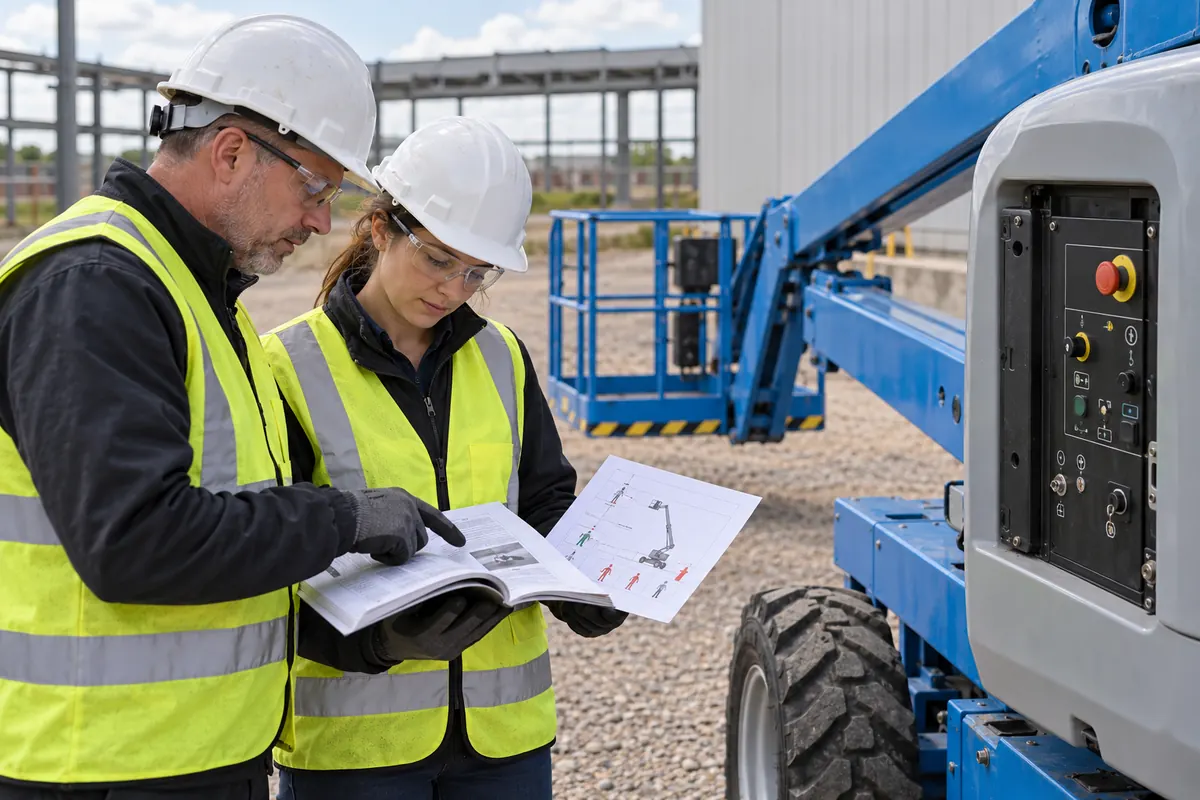
A MEWP rescue plan template should explain who will respond, how they will raise the alarm and which machine-specific arrangements they are prepared to use. Writing call emergency services is not a complete plan for someone unable to lower a platform. Plan for the actual machine, task and work position before elevation.
Before using the template
Use competent people and the current manufacturer instructions. IPAF guidance discusses MEWP recovery and rescue, including platform and ground controls and emergency or auxiliary systems. Identify credible scenarios and assess the appropriate response rather than copying one lowering sequence across different machines. This template records planning decisions; it does not teach an untrained person how to operate emergency controls or carry out an improvised transfer at height.
Copy and adapt: Add the actual task, asset or location, relevant instructions and the person responsible for each decision. This original template supports the site process.
Practical review checklist
| Review item | What to confirm or record |
|---|---|
| Task and machine | Record site, location, machine model, asset ID, work height and the proposed work position. |
| Credible scenarios | Consider operator incapacity, control failure, entrapment and the conditions relevant to the task. |
| People and roles | Name the operator, nominated ground response person, supervisor and specialist support arrangements. |
| Machine information | Identify the correct instructions and the approved controls and systems relevant to recovery. |
| Access and keys | Confirm responders can reach the required controls and any necessary keys or access arrangements. |
| Response method | Record the assessed response for each scenario, its limits and the competent decision authority. |
| Communications | Set alarm method, location information, emergency contacts and arrangements for communication failure. |
| Practice and readiness | Confirm familiarisation, equipment availability and a safe practice or verification of the plan before work. |
A worked planning example
Illustrative example: a boom lift is positioned beside a structure, but stored materials block the ground-control access. The planning review identifies the obstruction before anyone elevates. The area is rearranged and the nominated responder confirms access. Naming a trained person alone would not have made the response usable.
Follow-up and records
Add a scenario table with trigger, planned action, responsible person and escalation point. Verify the plan at the actual work location and review it when the machine or layout changes. Never assume all emergency lowering systems work in the same way. If a response could worsen entrapment or another hazard, the plan must address that risk and the need for specialist assistance.
Keep the date, finding, action owner, due or hold point and closure evidence traceable. Record a reason for not applicable items. Escalate unresolved safety concerns before releasing the affected work.
Track outstanding actions in the daily safety officer report and review repeated issues through the safety committee action log.
Common questions
Should the plan be practised?
HSE recommends having a MEWP rescue plan and practising it. Plan any exercise safely with competent people.
Can another MEWP always be used for rescue?
No. Any such method needs a specific competent assessment, suitable equipment and planned procedures. Do not improvise it.
Primary sources and applicability
Source jurisdictions are identified below. Confirm current Saudi requirements, the site assessment and applicable manufacturer instructions. No client or regulator approval of this example is claimed.
- IPAF: Principles of MEWP recovery and rescue — Industry guidance; apply to the actual machine and task.
- HSE: Mobile elevating work platforms — Great Britain construction guidance.