
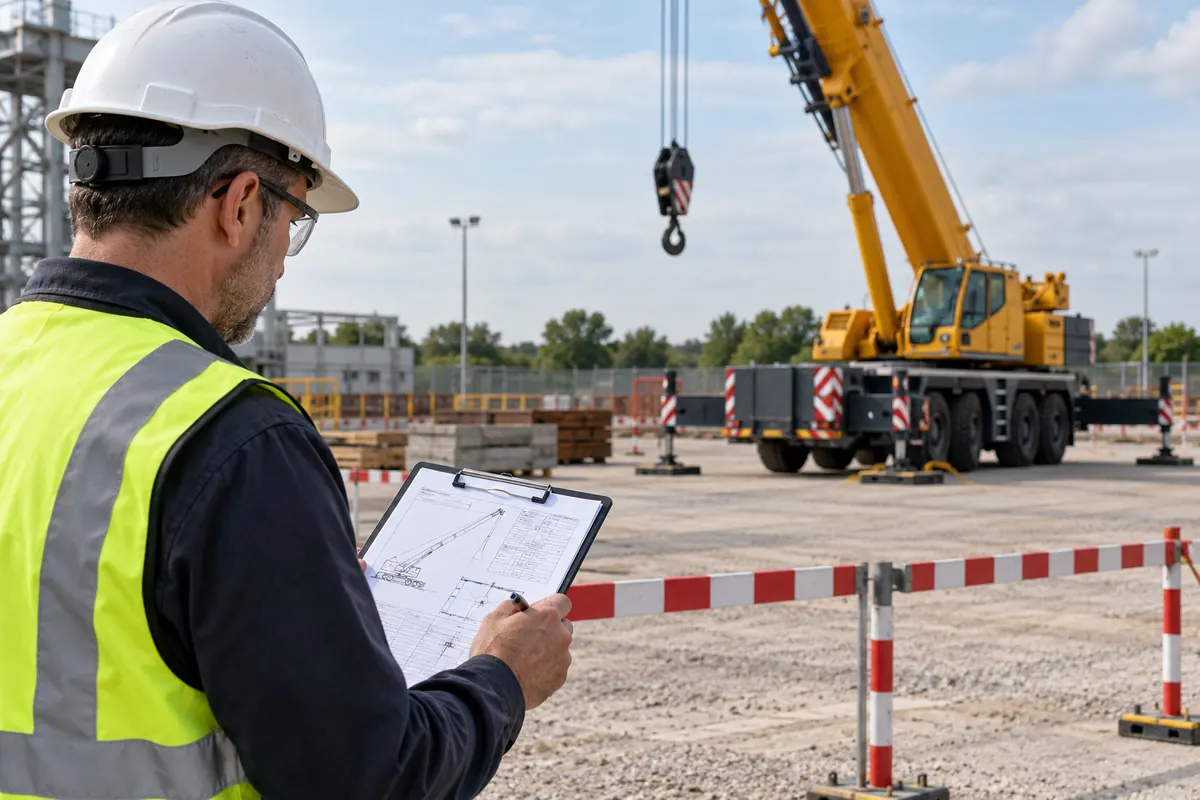
A lifting permit checklist helps the permit reviewer confirm that the planned lift and the work area agree. It should reference the lift plan and its supporting evidence. Repeating a list of certificates on a permit adds little if nobody checks whether those certificates apply to the crane, accessories and people actually on site.
Before using the checklist
Begin with the load, pick point, travel or slew path and landing arrangement. Ask the lift planner to resolve technical questions. HSE states that lifting operations must be properly planned, supervised and carried out safely under Great Britain requirements. The complexity of the plan should reflect the lift. A permit reviewer should not improvise a crane selection or ground-bearing design to complete a form.
Copy and adapt: Use this original checklist within your controlled site process. Add the applicable references and retain evidence for each decision.
Lifting Permit Checklist
| Review item | What to confirm or record |
|---|---|
| Lift identity | Link the current approved lift plan, exact location, load description and planned sequence. |
| Load information | Confirm the planner has established load weight, lifting points and relevant load characteristics. |
| Equipment match | Check crane configuration and accessories against the lift plan and identification records. |
| Supporting evidence | Review applicable inspection, examination and competence records for the actual equipment and team. |
| Ground and setup | Confirm the assessed ground, support and setup arrangements match the planned crane position. |
| Work envelope | Check the load path, landing area, exclusion zones and interfaces with nearby operations. |
| Communication | Identify the supervisor, operator and signalling arrangements and how work will be stopped. |
| Conditions and release | Confirm environmental limits from the plan and manufacturer, readiness checks and required authorisation. |
A worked example
Illustrative example: the lift plan was prepared for one crane configuration, but the arriving crane has a different boom setup. The permit review holds the lift and refers it back to the competent planner. A current equipment certificate does not establish that this configuration has sufficient capacity for the proposed lift.
Follow-up and records
Record unresolved items with an owner and a clear hold point. Brief the lifting team on the agreed arrangements and ensure affected trades understand the boundaries. If the load, crane position, configuration, weather or work interface changes, return to the planning process. At completion, confirm the load is safely landed and the area handed back through the site system.
Record the date, location or asset, findings, action owner, due or hold point and closure evidence. Use Yes / No / Not applicable only with a reason where needed. A blank or unexplained tick should not hide an unresolved concern.
Track outstanding actions in your daily safety officer report. Review recurring problems through your safety committee action log.
Common questions
Does every jurisdiction require a separate lifting permit?
Permit requirements depend on the organisation, client and applicable rules. This checklist supports systems that use a lifting permit.
Can a permit replace a lift plan?
No. It records the authorisation review and interfaces; the lift plan provides the task-specific lifting arrangements.
Sources and applicability
The sources below identify their own jurisdictions or product scope. Confirm current Saudi requirements, your client procedures and relevant manufacturer instructions before adopting this example. No regulator or client approval of this checklist is claimed.
- HSE: Lifting operations — Great Britain construction guidance.