
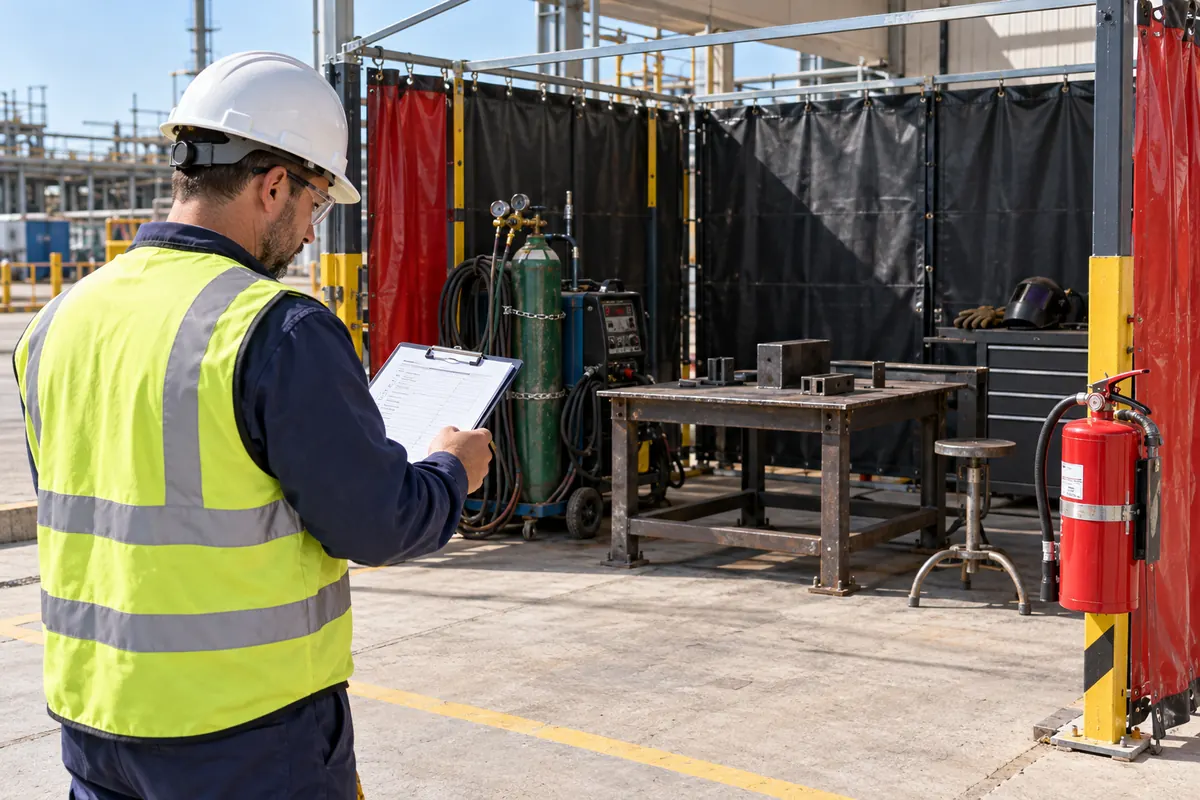
A hot work permit checklist should connect the proposed work to the fire precautions at its actual location. Welding or cutting in one bay may have very different consequences from the same activity beside a concealed void or an occupied room. Use the review to identify what can ignite, where heat can travel and who will monitor the area.
Before using the checklist
Consider whether a safer method or designated location can be used. Then walk the area with the people responsible for the work. Check above, below, behind and through openings, rather than looking only at the floor beside the operator. The US construction fire-prevention standard addresses removing or protecting fire hazards and providing additional fire watch where normal precautions are insufficient. Apply the relevant local and site requirements to the actual job.
Copy and adapt: Use this original checklist within your controlled site process. Add the applicable references and retain evidence for each decision.
Hot Work Permit Checklist and Close-Out Checks
| Review item | What to confirm or record |
|---|---|
| Scope and location | Specify the operation, equipment and exact work area; identify affected areas on the other side of the surface. |
| Combustibles | Remove combustible materials where practicable and protect immovable hazards using suitable measures. |
| Openings and heat transfer | Review cracks, penetrations, ducts, voids and adjoining spaces that could receive heat, sparks or slag. |
| Equipment condition | Confirm the welding or cutting equipment and accessories have been checked by the responsible people. |
| Atmosphere and contents | Establish any assessment, cleaning, isolation and atmospheric testing needed; specialist vessels require specialist controls. |
| Fire response | Confirm suitable accessible fire-fighting equipment and the alarm arrangements. |
| Monitoring | Define fire-watch responsibilities, coverage, communication and the required period after work. |
| Other exposures | Review fumes, ventilation, screens, nearby people, access and task-specific PPE. |
A worked example
Illustrative example: cutting is planned beside a wall penetration. The immediate floor is clear, but packaging is stored in the adjoining room. The permit review identifies the exposure on both sides. Work remains on hold until the responsible team removes or protects the material and agrees monitoring of the affected spaces. A tidy welding bay alone would not have addressed that hidden interface.
Follow-up and records
At close-out, record when hot work stopped, the areas checked and who completed the required monitoring. Follow the applicable duration and conditions; this checklist does not set one universal fire-watch time. Confirm the equipment is left safely and the permit is closed through the site process. Report any heat, smoke or other concern immediately instead of waiting to finish the form.
Record the date, location or asset, findings, action owner, due or hold point and closure evidence. Use Yes / No / Not applicable only with a reason where needed. A blank or unexplained tick should not hide an unresolved concern.
Track outstanding actions in your daily safety officer report. Review recurring problems through your safety committee action log.
Common questions
Is an extinguisher enough to approve hot work?
No. Fire prevention includes the task, combustibles, affected spaces, conditions, monitoring and emergency arrangements.
Does this permit cover entry into a tank?
No. Evaluate confined-space entry, contents and isolation separately and obtain the required linked authorisations.
Sources and applicability
The sources below identify their own jurisdictions or product scope. Confirm current Saudi requirements, your client procedures and relevant manufacturer instructions before adopting this example. No regulator or client approval of this checklist is claimed.
- OSHA 1926.352: Fire prevention — United States construction standard.