
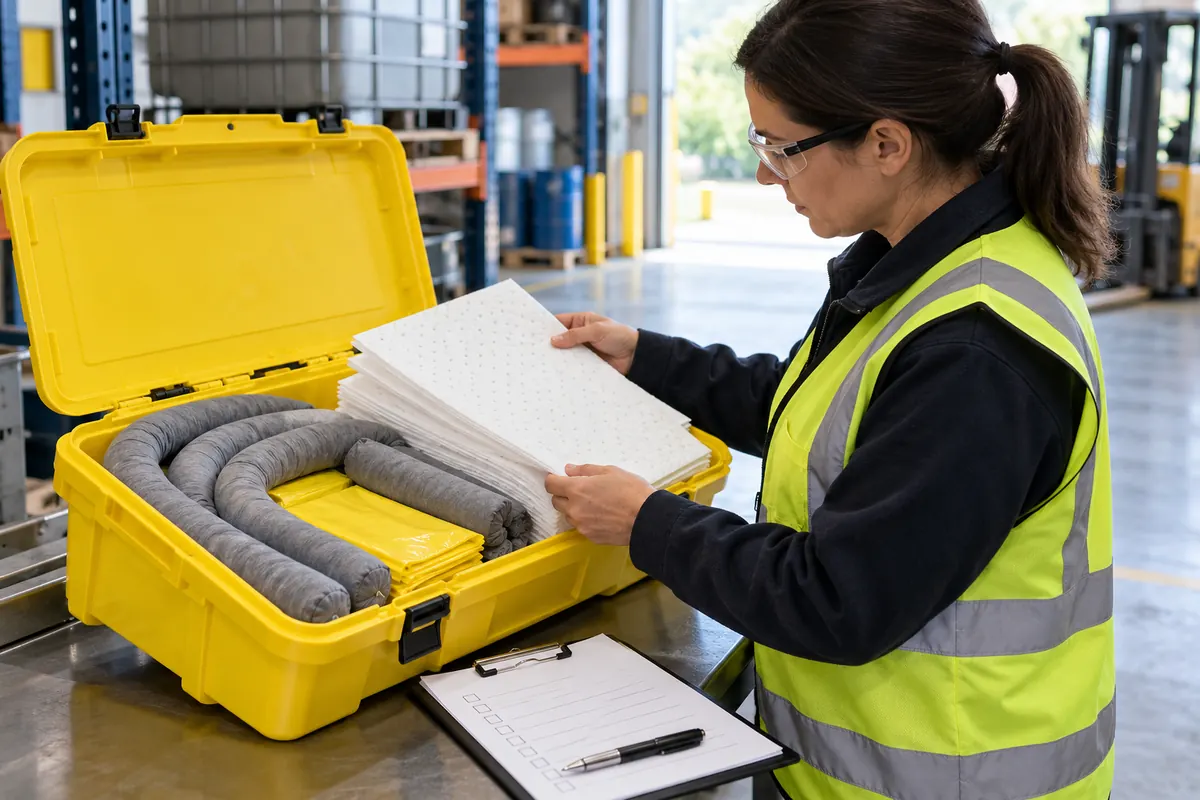
A spill kit inspection checklist helps confirm that the response materials match the substances and scenarios at a workplace. A large yellow container is not evidence that its contents are suitable for every liquid. Readiness depends on compatibility, access, trained responders and the limits of the response plan.
Before using the checklist
Review the substances, safety data sheets and site spill response arrangements before setting the stock list. Canadian CCOHS guidance describes chemical- or process-specific spill kits and the need for suitable protective equipment. Use that as a planning principle and confirm the actual manufacturer instructions and local environmental requirements. This article covers kit readiness, not permission to clean up an unknown or dangerous spill.
Copy and adapt: Use this original checklist within your controlled site process. Add the applicable references and retain evidence for each decision.
Spill Kit Inspection Checklist
| Review item | What to confirm or record |
|---|---|
| Kit identification | Record the kit ID, location and substances or scenarios it is intended to support. |
| Access and signage | Check people can locate and reach it without entering an unsafe area. |
| Compatibility | Confirm absorbents and accessories are suitable for the assessed substances and conditions. |
| Stock and capacity | Compare contents with the approved inventory and planned response capacity. |
| Condition | Check packaging, moisture, damage, contamination and manufacturer replacement criteria. |
| Protection and tools | Verify the assessed PPE and compatible tools are available and usable. |
| Waste arrangements | Check suitable collection materials and the route for controlled waste handling. |
| Response information | Confirm emergency contacts, escalation limits and trained responder arrangements are current. |
A worked example
Illustrative example: absorbent pads have been removed for routine housekeeping, leaving the kit below its approved stock. The inspector records the shortage and arranges replenishment. The responsible person also addresses why emergency stock was being used without replacement. Simply resealing the container would hide the reduced readiness.
Follow-up and records
After use, record what was consumed and restore the required provision. Do not return contaminated materials to the clean kit. Where contents are unsuitable or the response capability is unavailable, escalate and arrange appropriate interim controls. Unknown substances, hazardous vapours and uncontrolled releases need the site emergency response process; a stocked kit does not make untrained intervention safe.
Record the date, location or asset, findings, action owner, due or hold point and closure evidence. Use Yes / No / Not applicable only with a reason where needed. A blank or unexplained tick should not hide an unresolved concern.
Track outstanding actions in your daily safety officer report. Review recurring problems through your safety committee action log.
Common questions
Can one kit handle every chemical?
No. Compatibility and response method depend on the substance and scenario. Check the SDS, plan and product instructions.
Should the inspection include spill clean-up practice?
Training and drills can be planned separately. A stock inspection should not expose people to chemicals or exceed their competence.
Sources and applicability
The sources below identify their own jurisdictions or product scope. Confirm current Saudi requirements, your client procedures and relevant manufacturer instructions before adopting this example. No regulator or client approval of this checklist is claimed.
- CCOHS: Chemical spill response — Canadian guidance.