
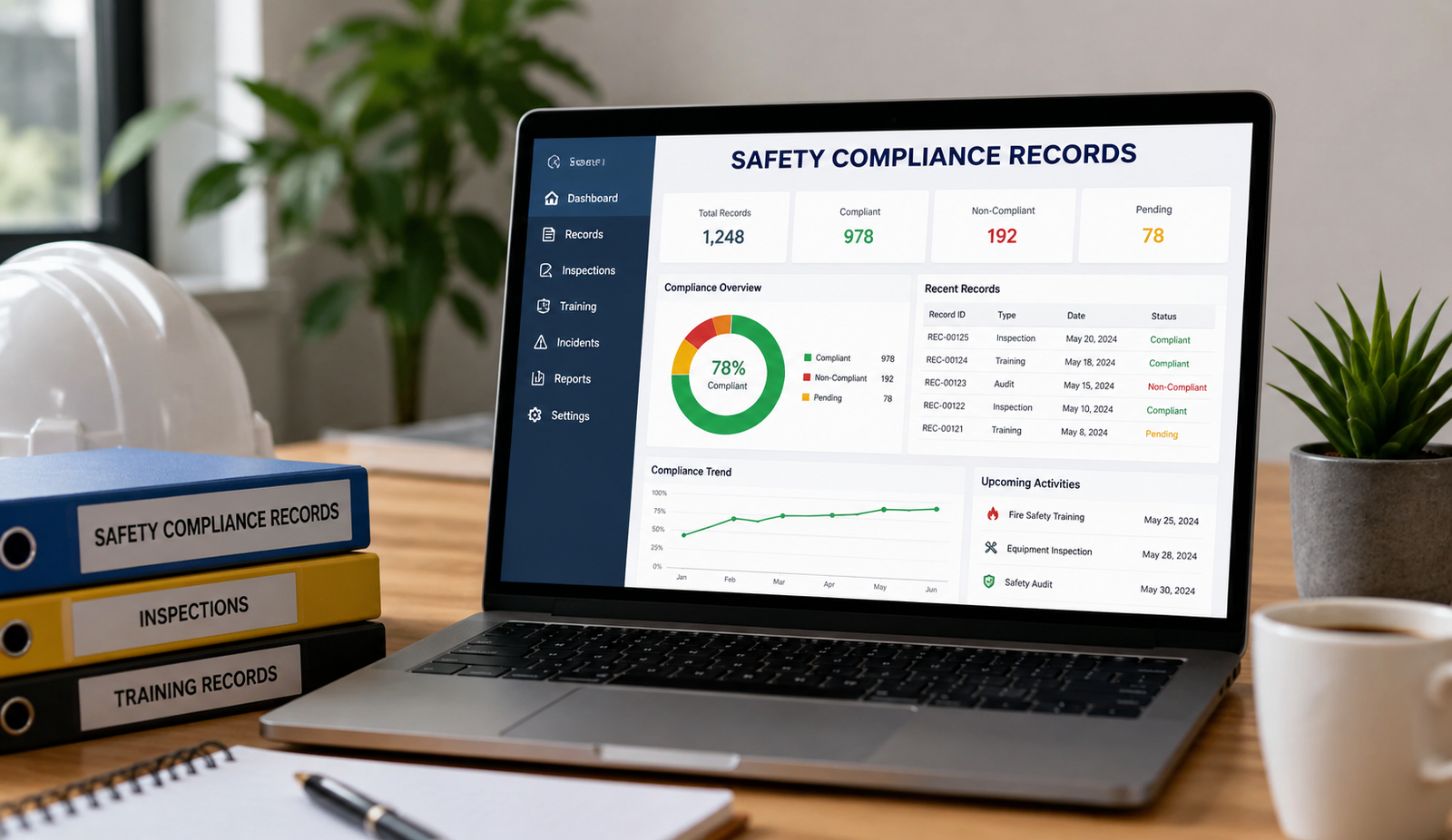
In the fast-paced business world, ensuring workplace safety and regulatory compliance is paramount. Safety Compliance Records are the unsung heroes in this endeavor. This comprehensive article takes you through the intricate landscape of Safety Compliance Records, unveiling their significance, types, maintenance, and their crucial role in your organization’s well-being.

Safety Compliance Records
What Are Safety Records?
Safety Compliance Records are the documented evidence of an organization’s commitment to safety, health, and regulatory adherence. These records testify to an organization’s dedication to maintaining a safe and compliant workplace.
Why Are Safety Compliance Records Essential?
Safety Compliance Records are not mere paperwork but the cornerstone of workplace safety. They serve as a compass guiding organizations through the labyrinth of safety regulations and legal requirements. These records help prevent accidents, ensure regulatory compliance, and save costs in the long run.
Real-Life Examples:
The Impact of Safety Compliance Records
Let’s look at some real-life examples of how safety compliance records have significantly impacted. In one case, a manufacturing company saw a decrease in workplace injuries and related costs after implementing a comprehensive record system. Another organization in the healthcare industry was able to identify trends and implement changes to improve patient safety through its robust record system.
Small Businesses and Safety Records
Many small businesses may think safety records are only necessary for larger organizations. However, these records are just as crucial for small businesses. By maintaining accurate, up-to-date records, they can ensure employee safety, avoid legal issues, and save costs in the long run.
Challenges and Solutions
While invaluable, safety compliance records do come with their challenges. These may include record-keeping errors, outdated information, and difficulties in employee engagement. By implementing solutions such as regular audits, automation tools, and involving employees in the record-keeping process, these challenges can be overcome for seamless record management.
Types of Safety Compliance Records
- Incident Reports: Learning from Mishaps
Incident reports document workplace accidents, near-misses, and other incidents. They provide valuable insights into the root causes of accidents, enabling organizations to take preventive measures.
- Training Records: Equipping Your Workforce
Training records demonstrate that employees are equipped with the knowledge and skills needed to handle workplace risks. They ensure a well-prepared and competent workforce.
- Safety Inspection Reports: Eyes on Safety
Safety inspection reports detail the findings of safety audits and inspections. They identify areas that need improvement and ensure safety protocols are followed.
- Safety Data Sheets (SDS): Unveiling Chemical Secrets
Safety Data Sheets contain essential information about hazardous chemicals in the workplace. They are crucial for understanding chemical composition, handling instructions, and emergency response procedures.
This comprehensive guide to Safety Records serves as your ultimate resource for understanding, implementing, and benefiting from these crucial documents. Whether you’re a small business owner or part of a large corporation, these records are your key to workplace safety, legal compliance, and a brighter future for your organization.
FAQS: Safety Compliance Records
Safety Compliance Records are documents that track an organization’s safety activities, employee training, inspections, incidents, and compliance with workplace safety regulations. They help maintain a safe and legally compliant work environment.
Safety Compliance Records are important because they help organizations prevent workplace accidents, meet regulatory requirements, reduce legal risks, and demonstrate their commitment to employee safety and health.
Safety Compliance Records typically include incident reports, employee training records, safety inspection reports, Safety Data Sheets (SDS), risk assessments, and corrective action records.
Safety Compliance Records should be updated regularly whenever safety inspections, training sessions, incidents, or workplace changes occur. Keeping records current ensures accuracy and compliance.
Safety Compliance Records help identify hazards, track safety performance, monitor compliance, and reveal trends in workplace incidents. This information enables organizations to implement preventive measures and create a safer work environment.